
October 11, 2026 · 9 min read
Amsterdam Anne Frank Walking Tour
From the Hollandsche Schouwburg through the old Jewish Quarter, past the Dockworker and the Dam, to the Anne Frank House on the Prinsengracht.
589

October 9, 2026 · 13 min read

 Friends walk free
Every tour also runs as a scheduled group walk you can join in the app.
More audio tours in Hoi An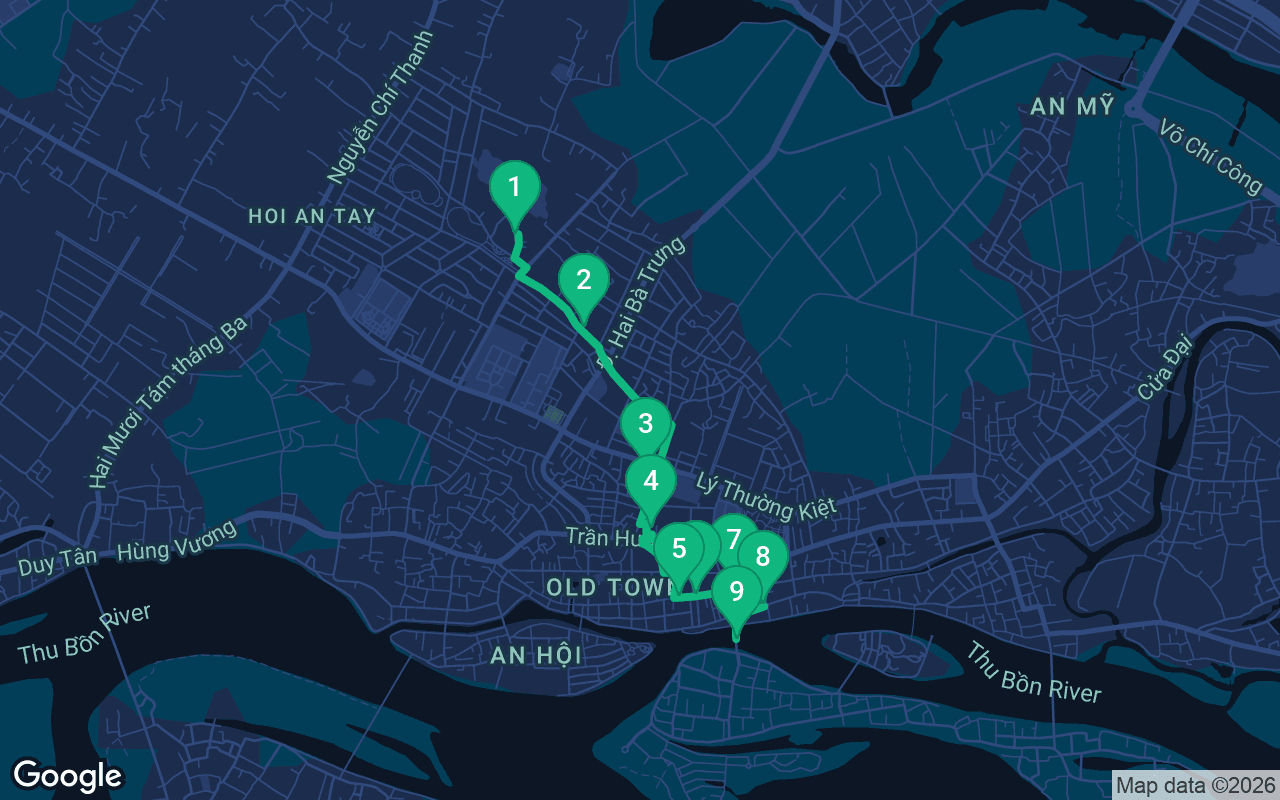
About 3.1 km, roughly 43 minutes at an easy pace.
This tour is narrated
Press play on the first 3 stops for a 30-second demo of the narration. In the app, the intro and those 3 stops play in full for free, each one chiming as you arrive. The whole narrated tour is yours for $8.99, a one-time purchase you keep for good.
Works with Garmin, Komoot, Strava, OS Maps and any GPX app.
Hoi An was not always a pretty little town of yellow walls and silk lanterns. For about three centuries it was one of the busiest ports in Southeast Asia, the place Europeans called Faifo, where ships from China, Japan, Portugal, the Netherlands and across Asia came to buy silk, porcelain, sugar, spices and fragrant wood. This walk follows that story. It starts at two quiet Buddhist pagodas on the northern edge of town, passes the Catholic church and the town museum, then drops into the old port, where Chinese merchant communities built ornate assembly halls along Tran Phu Street. It ends on the Cam Nam bridge, looking back across the river at the town the trade built. The route is a little over three kilometers and flat the whole way, one of the easier self-guided walking tours in Vietnam and one of the richest in stories.
The walking alone takes about three quarters of an hour, but allow a full morning, because the halls and museums are made for lingering. The two pagodas at the start lie about two kilometers north of the old town, an easy taxi, motorbike taxi or bicycle ride from the center, or a pleasant extra half hour on foot. Most of the historic sites in the old town are covered by the Ancient Town ticket, a strip of coupons, each of which admits you to one heritage site. The system has changed more than once over the years, so check before you go which sites it covers and where to buy it. Hoi An is hot and humid for much of the year, so start early, carry water and wear a hat. From roughly October to December the rains come, and the river can flood the lower streets, sometimes deep enough for boats; check local conditions in that season. The old streets are closed to cars, and to motorbikes too at set hours of the day and evening, which makes them lovely to walk. Dress modestly for the pagodas and halls, with shoulders and knees covered, and speak softly where people are praying.
You are standing at Phước Lâm, a Buddhist pagoda on the quiet northern edge of Hoi An, where the town loosens into gardens, ponds and fields. Its name means something like Forest of Blessings. Walk through the gate and look around the courtyard. There are bonsai trees in glazed pots, a main hall with a curved tiled roof, and, as often as not, the sound of a monk sweeping or chanting somewhere out of sight. This is a working pagoda, home to a small community of monks, so move quietly and keep your voice low. Phuoc Lam was founded in the late seventeenth century, at the time when Hoi An's trade was at its height. Its best known story concerns an abbot named An Thiem. The story goes that he became a novice here as a small boy, then at eighteen volunteered for the army so that his brothers would not have to go, and rose to high rank. When he came back to the monastic life, he asked to atone for the years of war by sweeping the streets of Hoi An's market every day for twenty years. Only after that did he return here, as head of the pagoda. Remember him later today, when you pass the market. To go on, walk back out the lane to the south to reach the main road, Tôn Đức Thắng, and turn left to follow it southeast. Chuc Thanh is just off the road, about eight minutes away.
Chúc Thánh is the pagoda Hoi An people often call their oldest, and it has the feel of a place that has been here a very long time. Look for the gnarled old trees in the courtyard and, in the grounds, the small tower tombs of former abbots. Tradition dates the pagoda to the 1450s and credits its founding to a Chinese monk named Minh Hai, although many historians think Minh Hai arrived from China much later, in the second half of the 1600s, and that the pagoda belongs to that time. Either way, his importance is not in doubt. The school of Zen Buddhism he taught here took the pagoda's name, and the Lâm Tế Chúc Thánh line spread from this courtyard to hundreds of pagodas across central and southern Vietnam. In the main hall the altars rise in tiers of gilded figures, with Amitabha, the Buddha of Infinite Light, among them. Old ritual objects are still in use here, including a wooden gong carved in the shape of a carp, a fish that stands for perseverance. It is worth pausing to notice how far you are from the tour groups. This is still a place of daily prayer and study. To continue, go back to the main road and keep heading southeast. Where it meets Hai Bà Trưng, carry straight on along Đinh Tiên Hoàng, then turn right onto Nguyễn Trường Tộ. The church is on your right, about twelve minutes in all.
 In front of you is the Catholic church of Hoi An, a modern building from the 1960s with a tall pointed front, blending a European Gothic shape with local touches. The building is young, but the story it tells is one of the oldest in Vietnamese Christianity. In 1615 a small party of Jesuits, led by the Italian priest Francesco Buzomi, landed on this coast and came to Faifo, as Hoi An was then known, partly to care for the Japanese Christians living among the merchants of the port. A parish was founded here the following year, and it is often described as the first permanent Catholic mission in what is now Vietnam. In the years that followed, missionaries working in this region studied the Vietnamese language closely and began writing it down in the Latin alphabet. The best known of them, the French Jesuit Alexandre de Rhodes, later published a dictionary, and that way of writing grew, over centuries, into the alphabet Vietnamese is written in today. Look for the tombs in the churchyard, where missionaries and priests who served in the town are buried; their remains were moved here from an older site. Continue south along Nguyễn Trường Tộ for about four minutes to Trần Hưng Đạo. The museum is on the corner.
What's included
Our tours are made to be meditative and immersive: you keep moving and simply listen. They're always better together, and the app plays the narration in sync, so you, your partner and your friends hear every stop at the same moment.
This is the Hoi An Museum, the town's museum of history and culture, and it is the best place to understand everything you are about to see. Start at the beginning, which here is a long way back.
The rest of this stop is in the full audio tour.
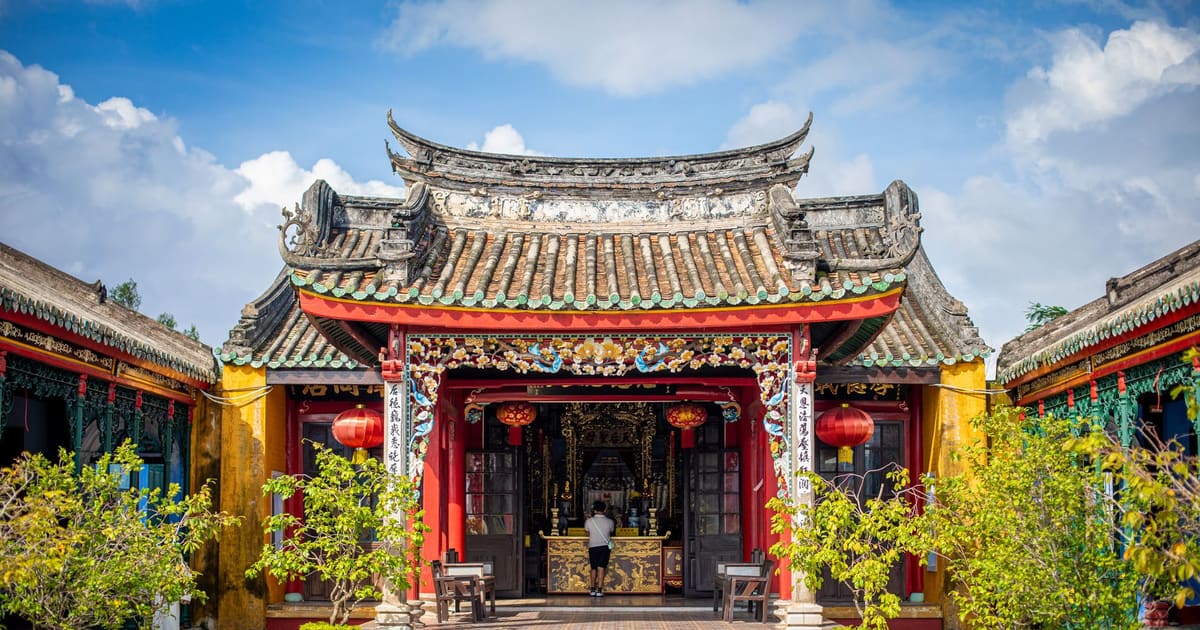
You are at the Phúc Kiến Assembly Hall, the hall of the merchants from Fujian, the largest and richest of the Chinese communities in old Hoi An.
The rest of this stop is in the full audio tour.
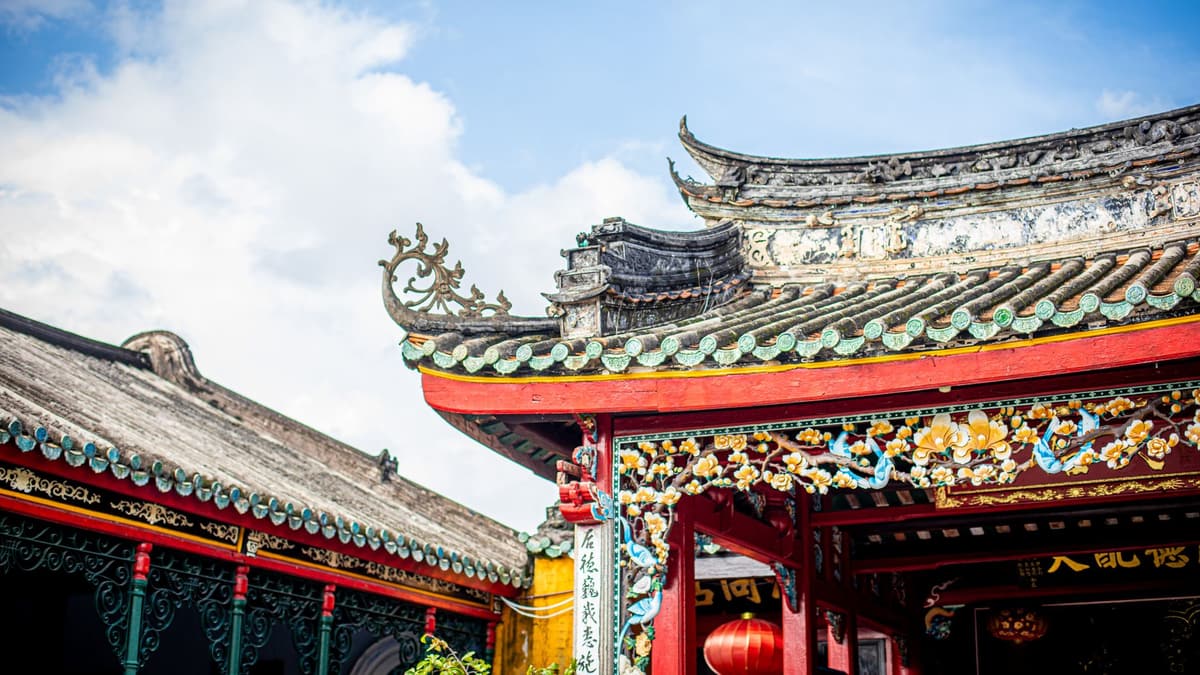
This is Quan Công Temple, which Hoi An people often simply call Chùa Ông, the temple of the Venerable.
The rest of this stop is in the full audio tour.
You are at the Triều Châu Assembly Hall, built in the 1840s by merchants from Chaozhou, a region of eastern Guangdong famous in China for its wood carving.
The rest of this stop is in the full audio tour.
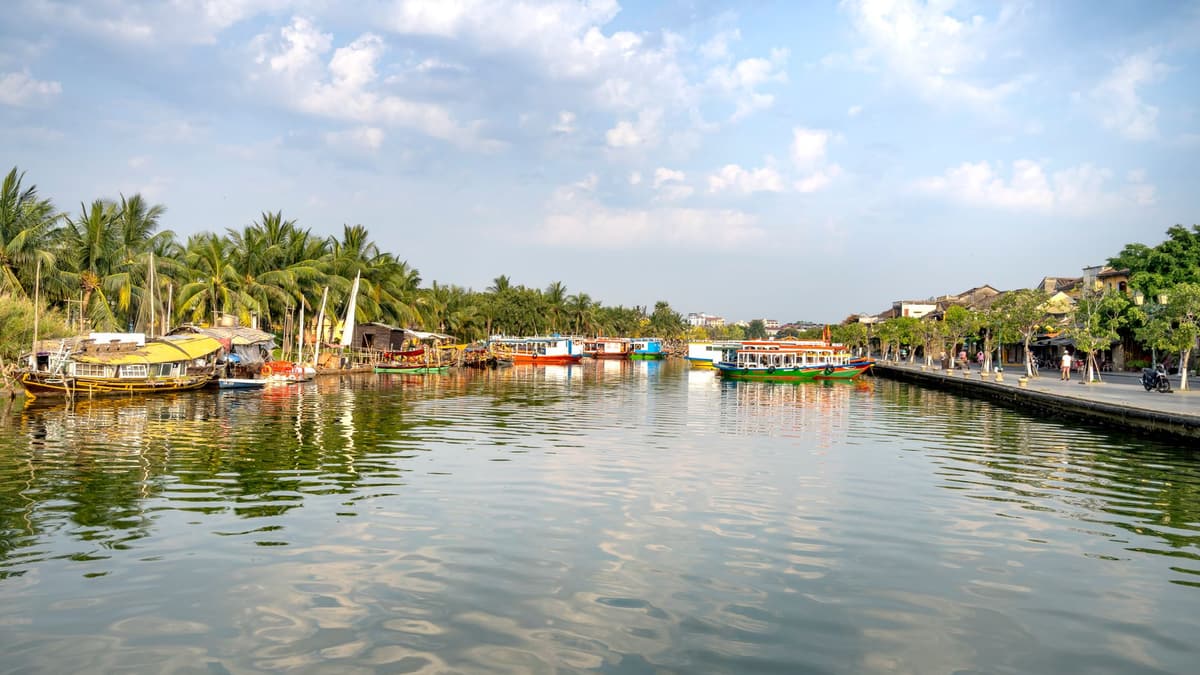
You are now in the eastern end of the old town, on a street of colonnaded houses from the French colonial era, when Hoi An's harbor had silted up, its trade had moved to Da Nang, then called Tourane, and the town had become a…
The rest of this stop is in the full audio tour.
The walk ends on the Cẩm Nam bridge, which crosses the river to Cẩm Nam, a low island of houses, gardens and small eateries just south of the old town. Walk out to the middle and turn to face west, upstream.
The rest of this stop is in the full audio tour.
Do this walk with other people on the next scheduled tour.
About 3.1 km, roughly 43 minutes at an easy pace · 9 stops
Friends walk freeOctober 11, 2026 · 9 min read
From the Hollandsche Schouwburg through the old Jewish Quarter, past the Dockworker and the Dam, to the Anne Frank House on the Prinsengracht.
October 11, 2026 · 11 min read
From Van Houten's street by the Vondelpark past Leidseplein, the Rijksmuseum passage and the famous canal bench to the Anne Frank House.

October 11, 2026 · 10 min read
Follow the last days of April and May 1945 from the Anhalter Bahnhof ruin past the Gestapo site and Brandenburg Gate to the Moltke Bridge and the Reichstag.
