
October 11, 2026 · 9 min read
Amsterdam Anne Frank Walking Tour
From the Hollandsche Schouwburg through the old Jewish Quarter, past the Dockworker and the Dam, to the Anne Frank House on the Prinsengracht.
589

October 9, 2026 · 13 min read

 Friends walk free
Every tour also runs as a scheduled group walk you can join in the app.
More audio tours in Rothenburg ob der Tauber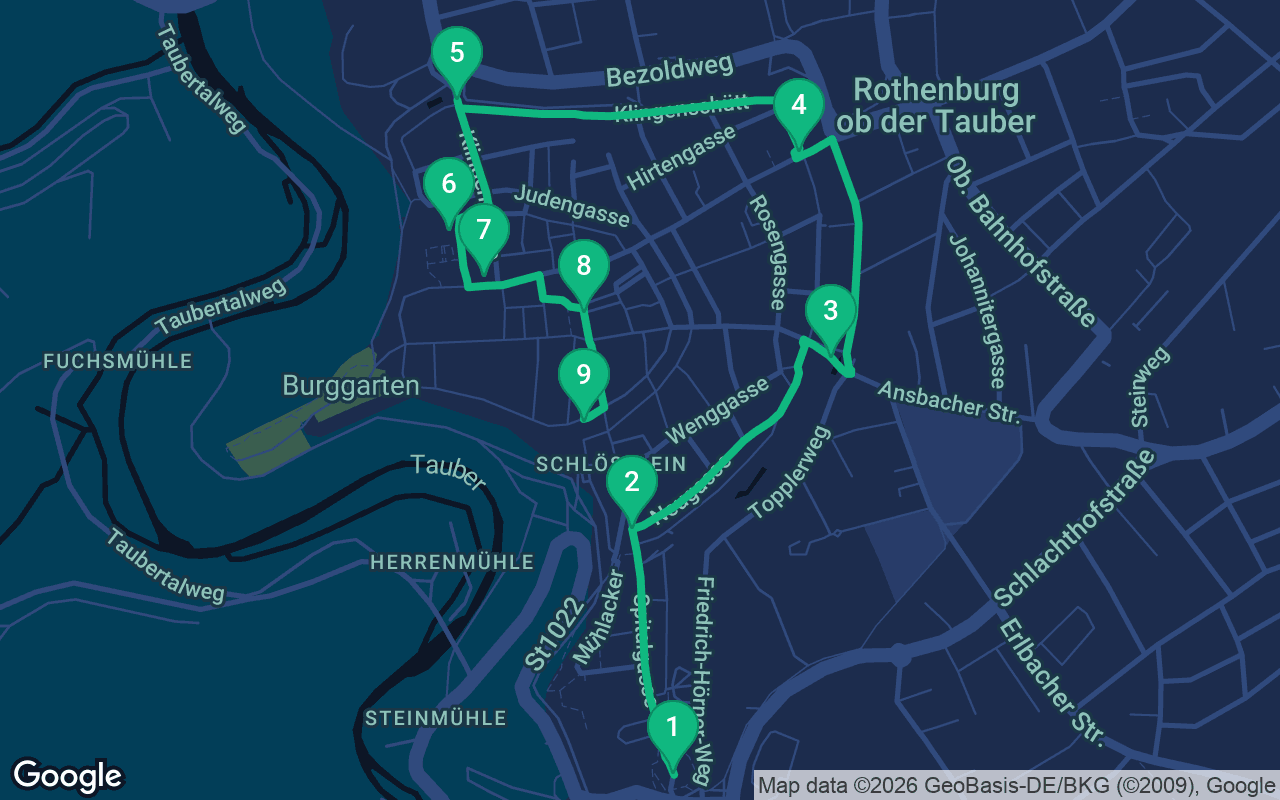
About 2.7 km, roughly 38 minutes at an easy pace.
This tour is narrated
Press play on the first 3 stops for a 30-second demo of the narration. In the app, the intro and those 3 stops play in full for free, each one chiming as you arrive. The whole narrated tour is yours for $7.99, a one-time purchase you keep for good.
Works with Garmin, Komoot, Strava, OS Maps and any GPX app.
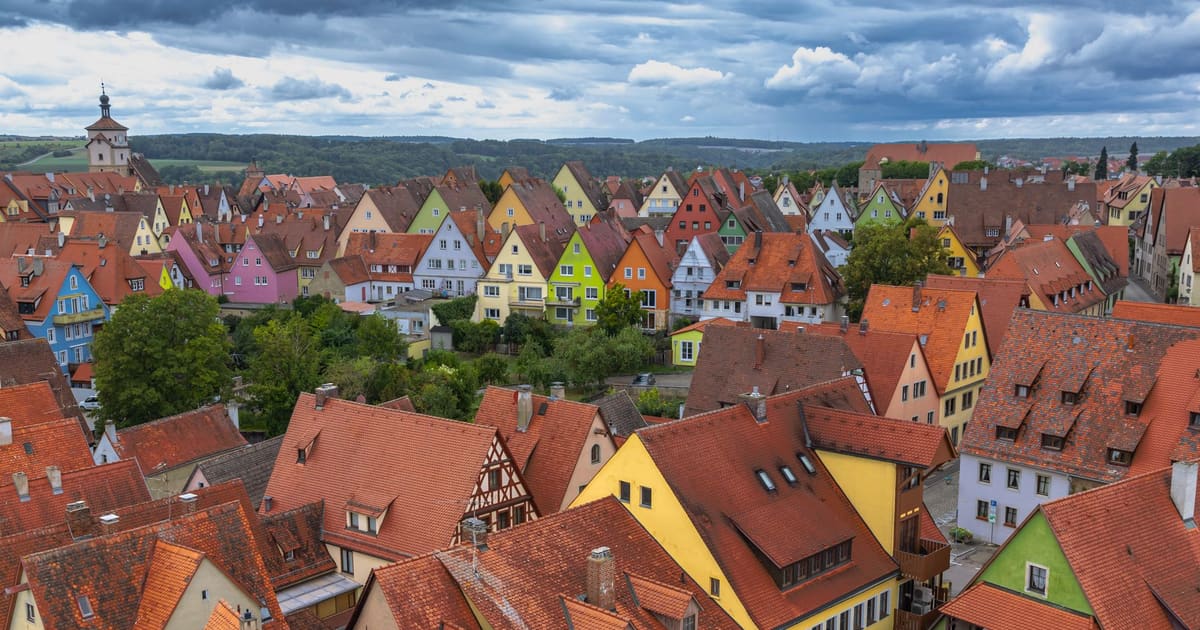
Rothenburg ob der Tauber, Rothenburg above the Tauber, is the rare town that still sits entirely inside its medieval walls, towers and gates all present and correct, as if someone had locked it up around 1600 and lost the key. This walk shows you how that happened. It starts at the great bastion on the southern tip of town, passes one of the most photographed corners in Germany, then follows the walls and gates of the east and north, partly up on the covered wall walk itself, before turning in to the town's grand church, its Market Square and a museum of medieval crime and punishment. It is about 2.7 kilometers, roughly a mile and three quarters, and one of the most satisfying self-guided walking tours in Bavaria.
The walking alone takes under an hour, but give yourself two and a half to three hours with stops, and more if you go into the museums. Rothenburg is small and mostly level, but the streets are cobbled, some steeply, so wear comfortable shoes with a good grip. One section of this walk uses the wall walk, the covered gallery along the top of the town wall. It is a highlight, but take care up there. The steps up to it are steep and narrow, the walkway is narrow in places, and the railing on the town side is low, so keep children close, watch bags and backpacks, and mind your head under the beams. If you would rather not climb, the lanes at the foot of the wall run alongside and get you to the same gates. Rothenburg is a favorite stop for day trips, so the center is busiest from late morning to late afternoon; early morning and evening are calmer and more atmospheric. The museums, the tower climbs and the clock show on the Market Square all keep set hours, so check them before you go.
You are standing at the southern tip of Rothenburg, inside the Spitalbastei, the Spital Bastion, the most powerful fortification the town ever built. Look around and you will see it is not a single gate but a maze. Two inner courtyards, one behind the other, are linked by a sequence of seven gates, and attackers who forced one would find themselves trapped in a walled yard, under fire from all sides, facing the next. There was a drawbridge too, and up on the broad top level, which you can walk onto, cannon once covered every approach. The bastion was added in the sixteenth and seventeenth centuries, when gunpowder had made simple medieval walls easy to batter down. Look for a Latin motto on the gateway, Pax intrantibus, salus exeuntibus, peace to those who come in, safe passage to those who leave. The name Spital means hospital. Inside the gate lies the old hospital of the Holy Spirit, which cared for the sick, the old and poor travelers from the thirteenth century on. The town first grew south to take it in, then wrapped it in walls of its own. From here walk north up Spitalgasse, the long, straight street ahead of you, for about six minutes. You will pass through the arch of an old gate tower at the top, and the Plönlein is right in front of you.
Walk a few steps past the little fountain, then turn around. This is the Plönlein, and you have probably seen it before, on a calendar, a jigsaw puzzle or a cookie tin. A tall, narrow half-timbered house, painted yellow, stands at a fork in the road. To the left, the street climbs through the Siebers Tower, the gate you just came through, built in 1385 and named for the makers of flour sieves who worked nearby. To the right, a lane drops steeply toward a second tower and the river valley below. The name Plönlein means little square, and it really is tiny, little more than a widening around a fountain. The two towers mark the moment the town outgrew its walls. As Rothenburg prospered in the fourteenth century it pushed outward, and these towers were part of the new defenses that took in the southern quarter you just walked up. Look at the houses around you. Their wooden frames were filled with woven sticks and clay and then plastered, and the upper floors jut out over the street. High in many gables you will see a beam with a hook or pulley, used to haul grain and goods up into the attic, where every household stored its supplies. Now take Neugasse, the street heading northeast, to the town wall, about four minutes, then turn left along the lane just inside the wall and follow it north to Rödergasse. The gate is on your right, about eight minutes in all.
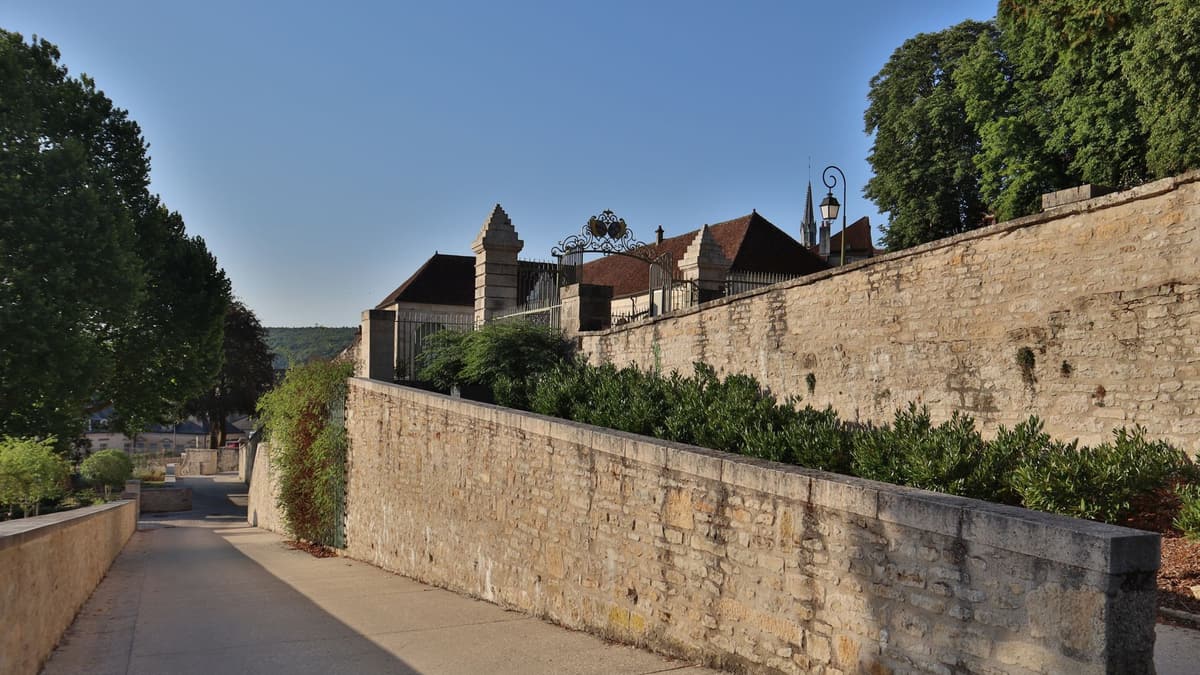 On your way here you passed a crooked half-timbered house on a corner, the Gerlach smithy, first built in 1469. Remember it, because it was destroyed in 1945 and rebuilt afterward almost exactly as it had been. Now look up at the Röder Gate, the Rödertor, the east gate of town, built in the 1380s. Beyond the inner tower is an outer gate with two small guardhouses, where watchmen once checked travelers and collected tolls. This is the one tower in the walls you can usually climb, and from the top you see the whole town spread out, a sea of red roofs. On 31 March 1945, a few weeks before the end of the war, an air raid struck the eastern part of Rothenburg. Several hundred houses were destroyed, along with a long stretch of this wall, and the tower itself was burned out. The town was then spared further destruction. The story usually told is that John McCloy, an American official in the War Department, knew of Rothenburg's beauty and urged that it be spared from artillery, and that the town was surrendered without a final battle. After the war the walls were rebuilt with donations from around the world, and the donors are remembered by name on stone plaques set into the wall walk. Climb the steps onto the wall walk near the gate and follow it north for about six minutes, or walk along the path just outside the wall, to the next gate.
What's included
Our tours are made to be meditative and immersive: you keep moving and simply listen. They're always better together, and the app plays the narration in sync, so you, your partner and your friends hear every stop at the same moment.
Up on the wall walk, look down at the plaques set into the stones as you go, names of people, families and groups from America and around the world who helped rebuild the wall.
The rest of this stop is in the full audio tour.
In front of you is the Klingentor, the Klingen Gate, the town's northern gate, a tall square tower rising over the lane. The upper part of the tower is said to have held a water tank that fed fountains in the town.
The rest of this stop is in the full audio tour.
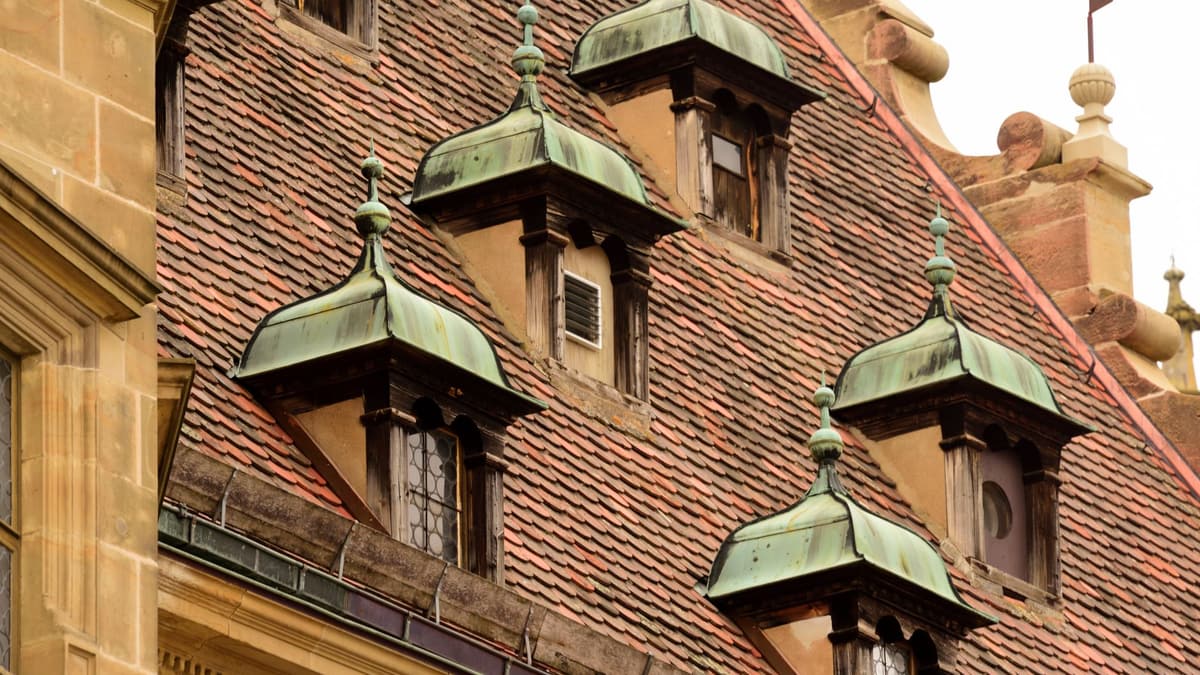
You are in front of a former convent of Dominican nuns, founded in the thirteenth century. For hundreds of years, daughters of well-off local families lived and prayed here behind the walls, until the Reformation emptied the convent.
The rest of this stop is in the full audio tour.
This is St. James's Church, St. Jakob, the main church of Rothenburg, built over more than a century and a half and consecrated in 1485.
The rest of this stop is in the full audio tour.
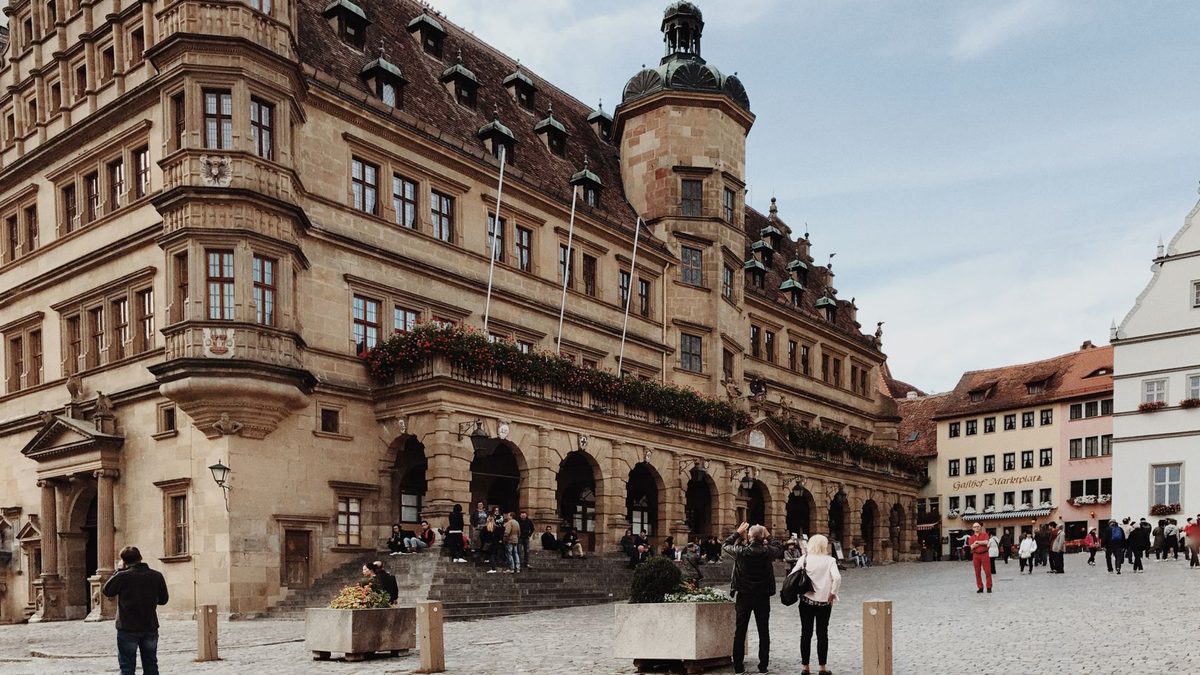
You are on the Marktplatz, the Market Square, the heart of Rothenburg. The Town Hall fills one side.
The rest of this stop is in the full audio tour.
You end at the Medieval Crime Museum, the Mittelalterliches Kriminalmuseum, housed in buildings that once belonged to the Knights of St. John. It covers centuries of law and punishment in Europe, and it is as fascinating as it is grim.
The rest of this stop is in the full audio tour.
Do this walk with other people on the next scheduled tour.
About 2.7 km, roughly 38 minutes at an easy pace · 9 stops
Friends walk freeOctober 11, 2026 · 9 min read
From the Hollandsche Schouwburg through the old Jewish Quarter, past the Dockworker and the Dam, to the Anne Frank House on the Prinsengracht.
October 11, 2026 · 11 min read
From Van Houten's street by the Vondelpark past Leidseplein, the Rijksmuseum passage and the famous canal bench to the Anne Frank House.

October 11, 2026 · 10 min read
Follow the last days of April and May 1945 from the Anhalter Bahnhof ruin past the Gestapo site and Brandenburg Gate to the Moltke Bridge and the Reichstag.
