
October 11, 2026 · 9 min read
Amsterdam Anne Frank Walking Tour
From the Hollandsche Schouwburg through the old Jewish Quarter, past the Dockworker and the Dam, to the Anne Frank House on the Prinsengracht.
589

October 9, 2026 · 9 min read

 Friends walk free
Every tour also runs as a scheduled group walk you can join in the app.
More audio tours in Seminyak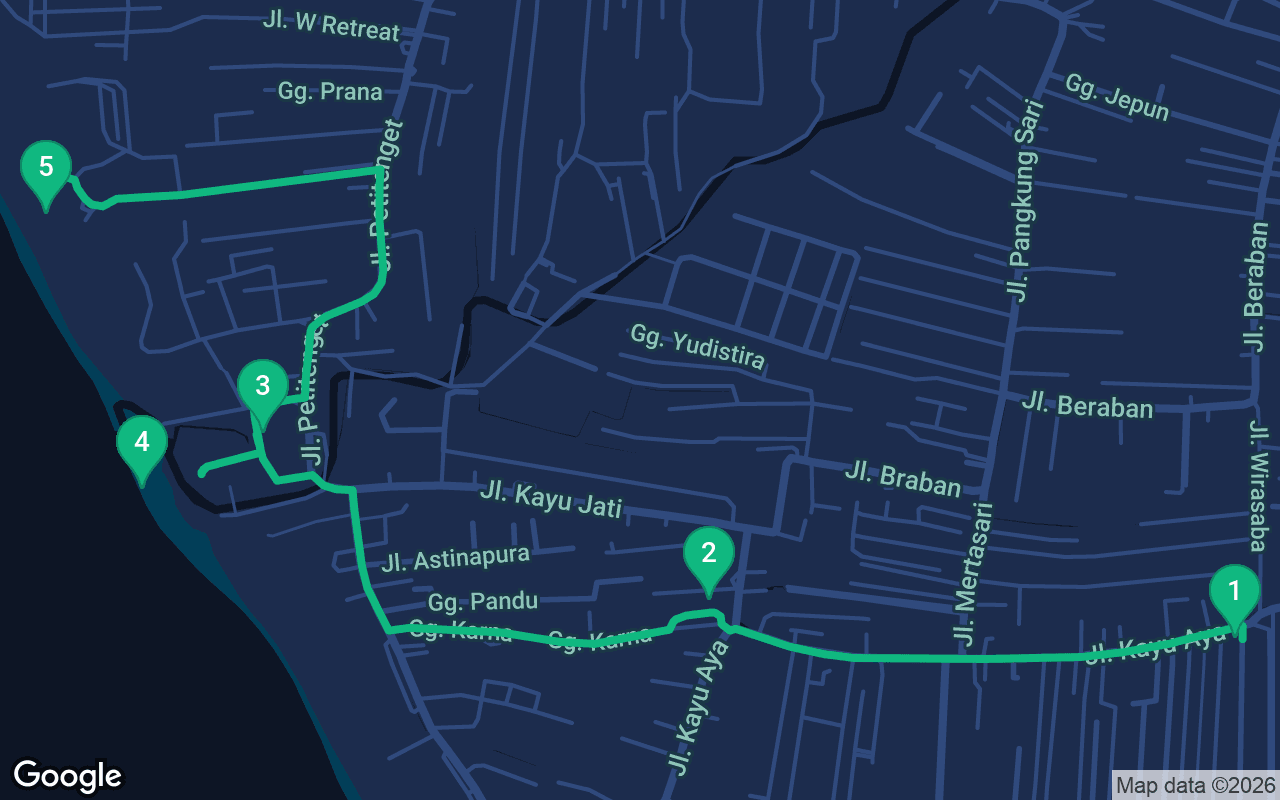
About 2.4 km, roughly 33 minutes at an easy pace.
This tour is narrated
Press play on the first 3 stops for a 30-second demo of the narration. In the app, the intro and those 3 stops play in full for free, each one chiming as you arrive. The whole narrated tour is yours for $7.99, a one-time purchase you keep for good.
Works with Garmin, Komoot, Strava, OS Maps and any GPX app.
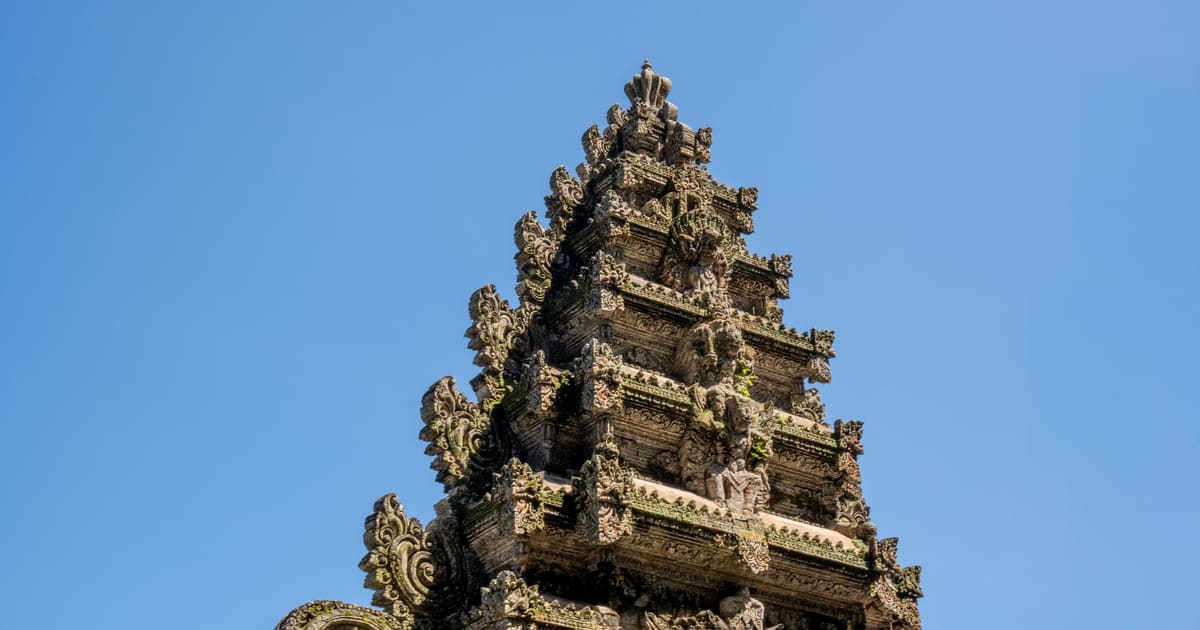
Seminyak has two faces, and this walk shows you both. It begins on Jalan Kayu Aya, the strip of restaurants and boutiques that everyone calls Eat Street, passes Seminyak Square, and then turns toward the sea to Pura Petitenget, one of the old temples that guard Bali's coast. From the temple you step down onto the sand and finish at Potato Head Beach Club, with its famous wall of wooden shutters. It is about two and a half kilometers in all, short enough for a late afternoon, and one of the few self-guided walking tours in Bali that takes you from the island's busiest shopping street to one of its sacred places in barely half an hour. Along the way you will learn how to read the shrines, gates and offerings that most visitors walk straight past.
The walking takes about 35 minutes. Give it an hour and a half, more if you linger at the temple or wait for the sunset on the beach. The route is flat. The first half follows Jalan Kayu Aya, where the pavements are narrow and uneven, often laid over drains with the odd gap or loose slab, and scooters squeeze past constantly, so keep your eyes on your feet and take care crossing. Late afternoon is the best time to start, because you reach the beach as the light turns gold and the sun sets over the sea a little after six. Early morning works too, when the streets are calm and the temple is at its quietest. There is little shade on the street and none on the sand, so bring water, a hat and sunscreen, and expect short, heavy showers in the rainy season, roughly November to March. To visit the temple you need to cover your legs with a sarong and tie a sash around your waist, so bring your own. On the beach, swim only between the red and yellow flags, as rip currents are common along this coast.
You are standing on Jalan Kayu Aya, which you will also hear called Jalan Laksmana or Jalan Oberoi, after the hotel at its seaward end. Most people just call it Eat Street. Restaurants, cafes, bars and boutiques line it from end to end, and they change so often that any list would be out of date within a year, so check before you go if you have somewhere in mind. Look past the shopfronts, though, and you start to see a different Seminyak. Not long ago this was a village of rice fields and coconut groves, and many of the people who own this land still live behind the walls along it. Every Balinese home is a family compound, a group of small pavilions inside a wall, and every compound has its own family temple, usually in the corner closest to the mountains. Look over the walls for the tops of little shrines with thatched or tiled roofs. Bali is a Hindu island in a country where most people are Muslim, and its religion, known as Agama Hindu Dharma, is woven into daily life: one supreme god, understood through many gods and spirits, with the family temple at the heart of each home. When you are ready, walk west along Jalan Kayu Aya, toward the sea. Seminyak Square is about eight minutes ahead, on your left.
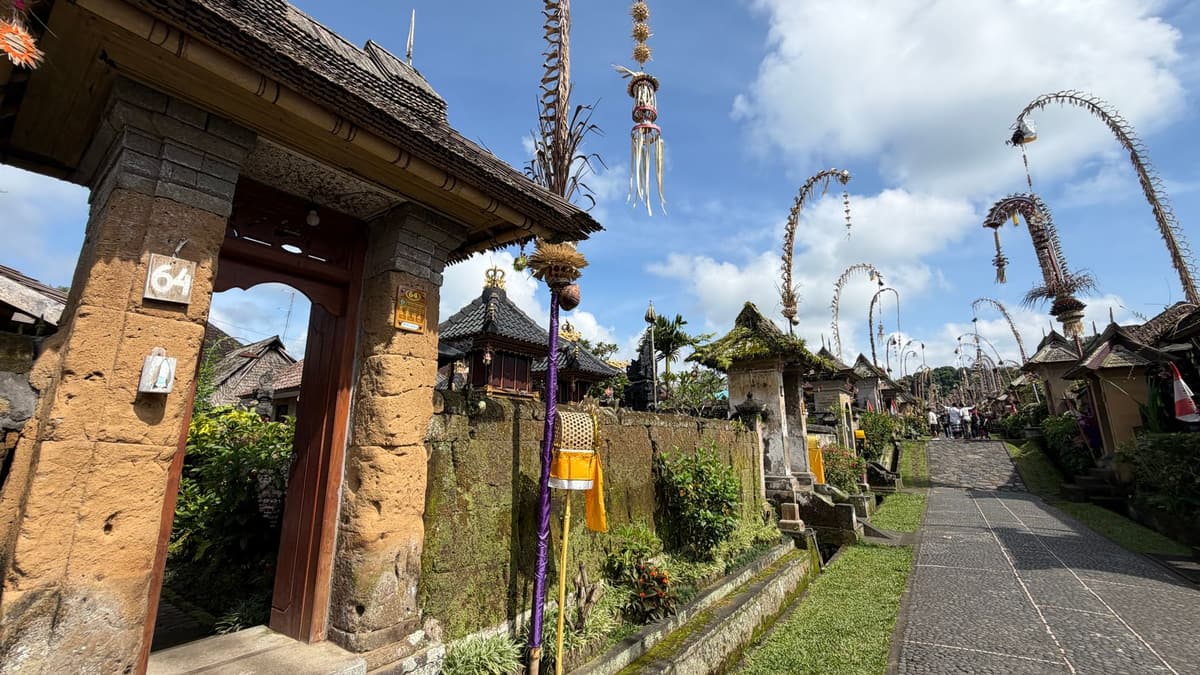 Seminyak Square is an open-air shopping square, a cluster of shops and cafes around a paved plaza just off Jalan Kayu Aya. Like everything on this street, the shops come and go, so treat it as a landmark rather than a destination. Pause somewhere out of the traffic and listen to the people around you, and you may notice that many Balinese share the same few first names. That is because most Balinese children are named by birth order. The first child is often called Wayan, Putu or Gede, the second Made or Kadek, the third Nyoman or Komang, and the fourth Ketut. A fifth child starts the cycle again with Wayan. So the waiter, the driver and the shopkeeper you meet today may all be called Made, and nobody finds that confusing. If you are here around Galungan, one of the biggest festivals of the Balinese year, the street will look very different. Galungan comes round every 210 days, following the Balinese calendar, and celebrates the victory of good over evil, when the spirits of ancestors are believed to return to their family homes. Tall bamboo poles called penjor, curving over the road and hung with woven palm leaf decorations, are set up outside almost every house and shop. To go on, keep walking west along Jalan Kayu Aya to the junction where the road bends. Turn right onto Jalan Petitenget, named after the temple, and the temple gate is on your left, about eight minutes away.
You are standing outside Pura Petitenget, one of the sea temples of Bali's southwest coast. Look first at the gateway: a split gate, called a candi bentar, shaped like a tower sliced cleanly in two, so you pass between the halves. Balinese temples are not single buildings but a series of walled courtyards open to the sky, each more sacred than the last. The outer court is for gatherings and preparations, and the innermost, reached through a narrower roofed gate, holds the shrines where the gods are invited to descend during ceremonies. The temple is linked to Dang Hyang Nirartha, a Hindu priest from Java who came to Bali around five hundred years ago and is credited with founding or reshaping many of the island's temples, among them Tanah Lot and Uluwatu, further along this same coast. The name is usually explained as "enchanted box," and the story told here is that Nirartha left a box of his belongings in the care of a guardian spirit. Every temple in Bali celebrates its anniversary, called an odalan, every 210 days, and then this place fills with offerings, music and families in white and gold. Visitors may usually look in from the outer areas. Wear your sarong and sash, never step on offerings, keep below the height of any priest, and do not climb the walls or shrines. By Balinese custom, women who are menstruating do not enter temples. Follow the path beside the temple down to the sand, two minutes away.
What's included
Our tours are made to be meditative and immersive: you keep moving and simply listen. They're always better together, and the app plays the narration in sync, so you, your partner and your friends hear every stop at the same moment.

Step out onto Petitenget Beach and look along it. It is a long, wide stretch of sand, usually less crowded than the beaches further south, and on most evenings it is filled with people gathering to watch the sun go down.
The rest of this stop is in the full audio tour.
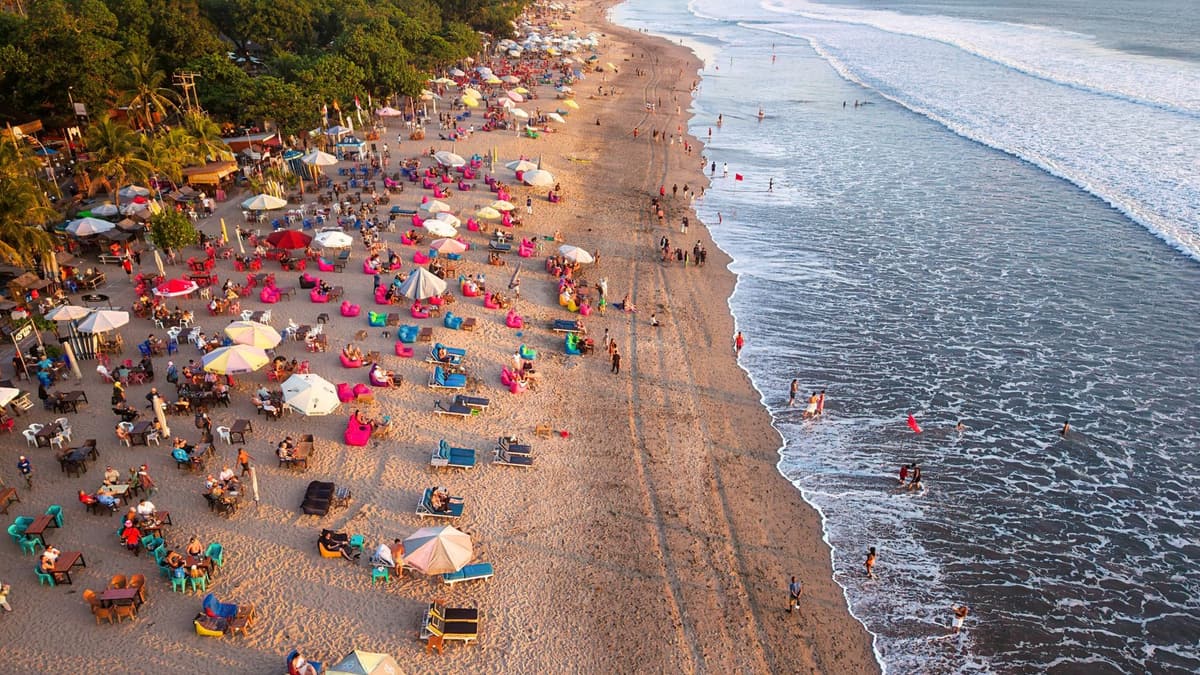
The walk ends at Potato Head Beach Club, and the building is the reason it is on the route.
The rest of this stop is in the full audio tour.
Do this walk with other people on the next scheduled tour.
About 2.4 km, roughly 33 minutes at an easy pace · 5 stops
Friends walk freeOctober 11, 2026 · 9 min read
From the Hollandsche Schouwburg through the old Jewish Quarter, past the Dockworker and the Dam, to the Anne Frank House on the Prinsengracht.
October 11, 2026 · 11 min read
From Van Houten's street by the Vondelpark past Leidseplein, the Rijksmuseum passage and the famous canal bench to the Anne Frank House.

October 11, 2026 · 10 min read
Follow the last days of April and May 1945 from the Anhalter Bahnhof ruin past the Gestapo site and Brandenburg Gate to the Moltke Bridge and the Reichstag.
