
 $6.99City Highlights
Manchester Walking Tour: Northern Quarter Street Art and Ancoats Mills
Choose how you'll do this walk in our app

 Friends walk free
Every tour also runs as a scheduled group walk you can join in the app.
More audio tours in Manchester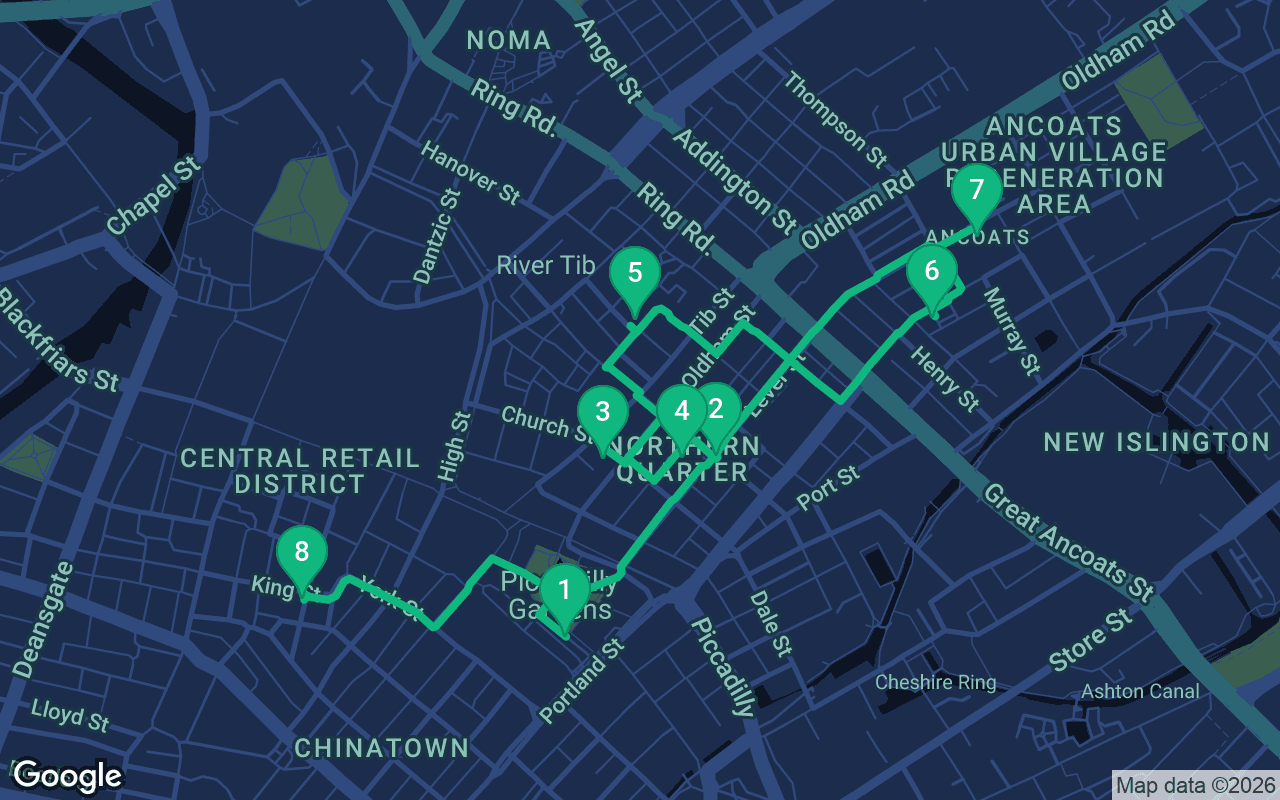
About 2.1 km, roughly 29 minutes at an easy pace.
- 1Rochdale Canal
- 2Piccadilly Gardens
- 3Affleck's
- 4Northern Quarter Street ArtFull tour
- 5Stevenson SquareFull tour
- 6Manchester Craft and Design CentreFull tour
- 7Cutting Room SquareFull tour
- 8AncoatsFull tour
This tour is narrated
Press play on the first 3 stops for a 30-second demo of the narration. In the app, the intro and those 3 stops play in full for free, each one chiming as you arrive. The whole narrated tour is yours for $6.99, a one-time purchase you keep for good.
Works with Garmin, Komoot, Strava, OS Maps and any GPX app.
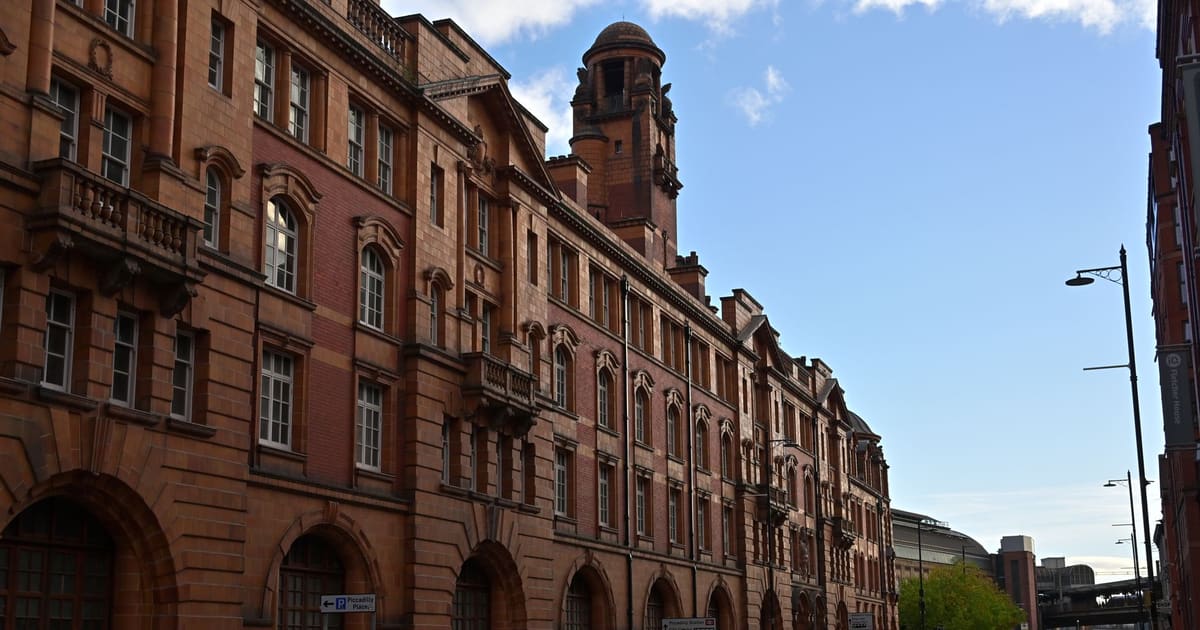
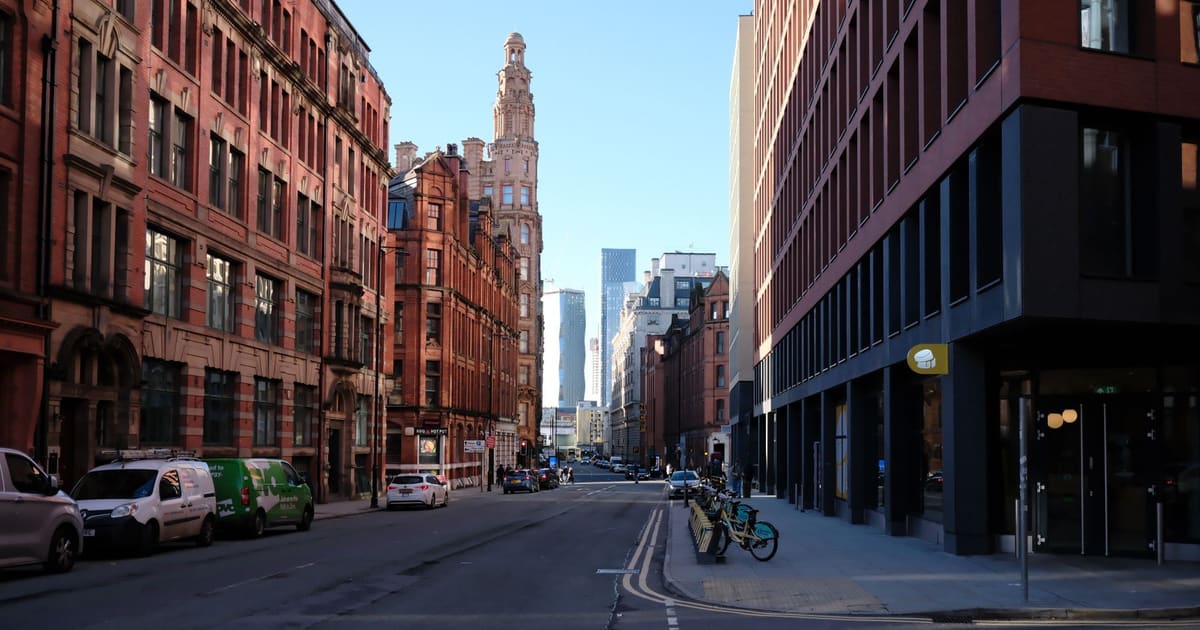
Manchester was the first great industrial city in the world, and the streets on this walk are where you can still feel it. This route starts on the towpath of the Rochdale Canal, steps up into the bustle of Piccadilly Gardens, then wanders through the Northern Quarter, a grid of old warehouses now full of record shops, vintage stalls, cafes and some of the best street art in Britain, before finishing among the restored cotton mills of Ancoats. It is a short, flat walk of roughly two and a half kilometers, and one of the most characterful self-guided walking tours in the north of England, where almost every redbrick wall has a story or a mural on it.
Before you set off
Give yourself about an hour and a half at an easy pace, and longer if you get lost in Affleck's or stop for coffee, which in the Northern Quarter is very easy to do. The streets are flat and paved, and the canal towpath is level but can be slippery after rain, so wear shoes with some grip. Manchester has a reputation for rain that it does its best to live up to, so bring a waterproof layer whatever the sky looks like when you start. The Northern Quarter wakes up late: late morning and early afternoon are best, when the shops are open and the streets are busy but not yet crowded with the evening bar trade. Affleck's and the Craft and Design Centre keep their own opening hours and are usually closed on some days, so check before you go if you want to browse. Keep your eyes up as you walk. The street art changes constantly, and some of the best pieces are high on gable ends, above shopfronts or down side streets you would otherwise pass without a glance.
Rochdale Canal
You begin beside the water on the Rochdale Canal, a dark, still ribbon running between brick walls right through the middle of Manchester. Stand on the towpath for a minute and listen: the traffic of the city is only yards away, yet down here it sounds distant. This canal was a marvel in its day. Opened in 1804, it was the first to cross the Pennine hills between Lancashire and Yorkshire, climbing over the moors by a long staircase of locks so that barges could carry cotton, coal, grain and finished cloth between the mill towns and the ports. Look out for the heavy wooden lock gates and the worn stone edges where ropes once rubbed grooves into the corners. The stretch through the city center is known to boaters as the Rochdale Nine, a flight of nine locks that drops the canal down toward its meeting with the Bridgewater Canal at Castlefield. As road and rail took over, most of the canal fell silent in the twentieth century, and it was only restored and reopened along its full length around the turn of this century. The mills you will see at the end of this walk once lined its banks. Now climb up to street level and head north to Piccadilly Gardens, about five minutes away.
Piccadilly Gardens
Piccadilly Gardens is the big open crossroads of central Manchester, where trams glide in, buses queue and half the city seems to cut across on its way somewhere else. Stand near the fountains and get your bearings. For generations this was the site of the old Manchester Royal Infirmary, which stood here until the early twentieth century, and after the hospital moved away the site became sunken gardens, much loved and much photographed. They were replaced at the start of this century by the open lawns, fountains and long concrete wall you see now, a change many Mancunians still grumble about. Look around for the statues on the edge of the square, among them Queen Victoria, who sits on a grand plinth here. What matters most for this walk is the street that leaves the square to the north. Oldham Street was once one of the busiest shopping streets in the city, lined with drapers and department stores, and it marks the edge of the Northern Quarter. As the big retailers left for newer centers, the cheap rents behind it drew in musicians, artists, record dealers and small traders, and the neighborhood you are about to enter grew out of them. Walk north up Oldham Street for about three minutes, and look for a tall corner building with mosaics on its walls.
Affleck's
 This rambling building is Affleck's, a Manchester institution for more than forty years. It began life as the Affleck and Brown department store, a grand Victorian drapers that sold fabric, furniture and fashion to the city's middle classes. When the store closed, the empty floors were taken over in the early 1980s by a jumble of small traders, and the place has been a haven for the city's alternative scene ever since. Inside, over several floors linked by narrow staircases, you will find vintage clothing, records, posters, badges, tattoo studios, costume shops and stalls that are hard to describe in a single word. Generations of teenagers have come here to buy their first band T-shirt or to find people who dress like them, and plenty of musicians who went on to play the big stages browsed here first. Before you go in, look at the outside walls. They are decorated with colorful mosaics, including one that reads "And on the sixth day God created MANchester," a line that sums up the city's affectionate self-belief, alongside other emblems of the city and its music. Take your time inside, then come back out and walk a minute east along the side street, where the walls start to fill with murals.
The full tour continues in the app
- Distance
- 2.1 km
- Walking
- 29 min
- Steps
- ~2,900
- Narration
- 14 min
What's included
- All 8 stops, fully narrated
- Works offline once downloaded in the app
- Friends walk free one purchase covers everyone on your walk
Our tours are made to be meditative and immersive: you keep moving and simply listen. They're always better together, and the app plays the narration in sync, so you, your partner and your friends hear every stop at the same moment.
Northern Quarter Street Art
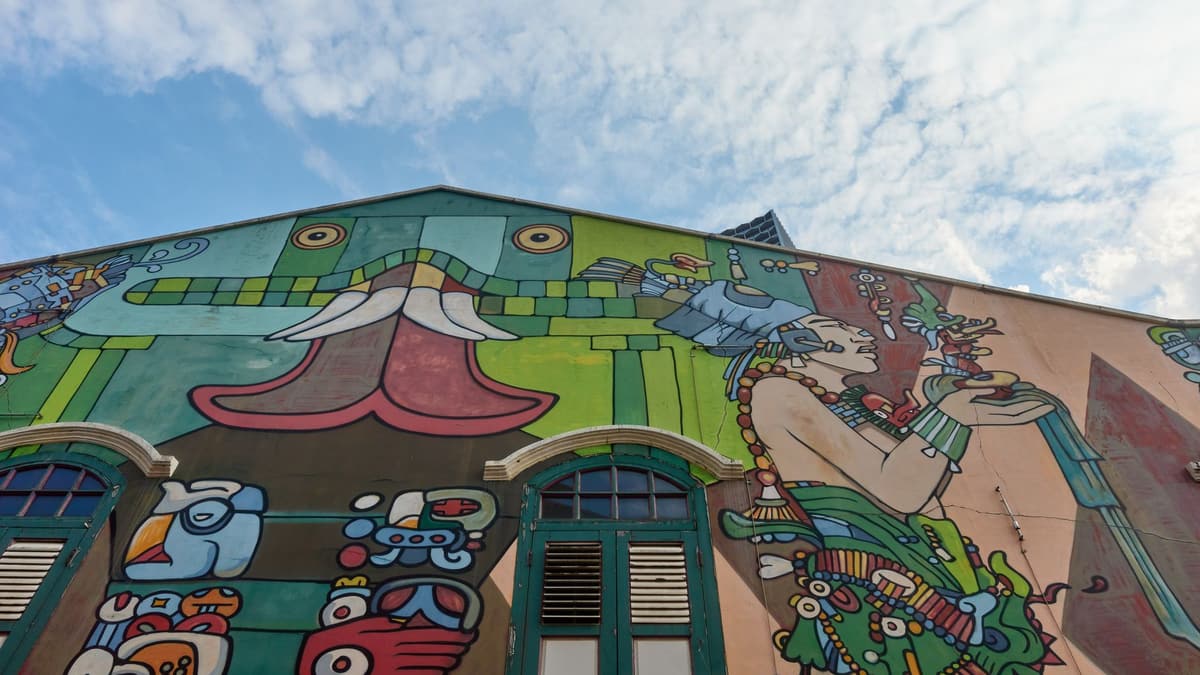
You are now in the open-air gallery of the Northern Quarter. Stand still and turn around: on gable ends, roller shutters, doorways and the backs of old warehouses, the walls are covered in murals, some a few inches high, some several stories tall.
The rest of this stop is in the full audio tour.
Stevenson Square
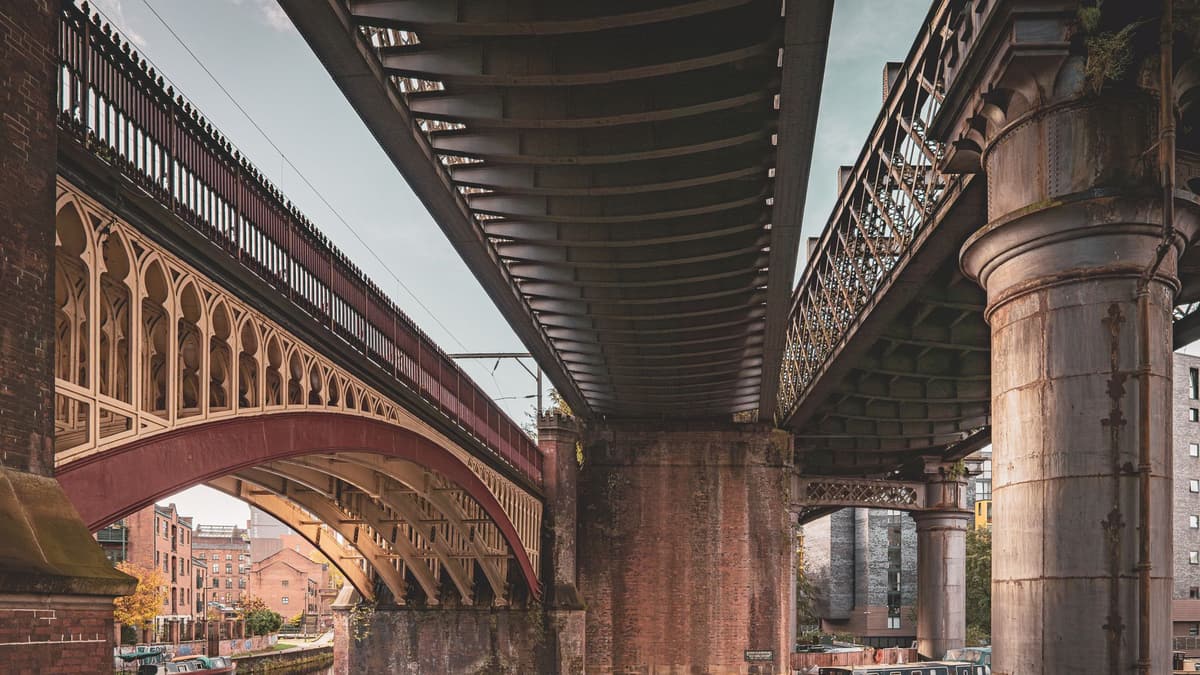
Stevenson Square is the little hub at the center of the Northern Quarter, a crossing of narrow streets ringed by bars, cafes and old warehouses.
The rest of this stop is in the full audio tour.
Manchester Craft and Design Centre
Step inside and look up. The Manchester Craft and Design Centre sits in a Victorian market building, once part of the city's great Smithfield wholesale market, where traders sold fish and poultry beneath this iron and glass roof.
The rest of this stop is in the full audio tour.
Cutting Room Square
You have crossed into Ancoats, and Cutting Room Square opens up in front of you, a paved square framed by tall redbrick buildings, with new apartments, restaurants and bars spilling out onto it.
The rest of this stop is in the full audio tour.
Ancoats
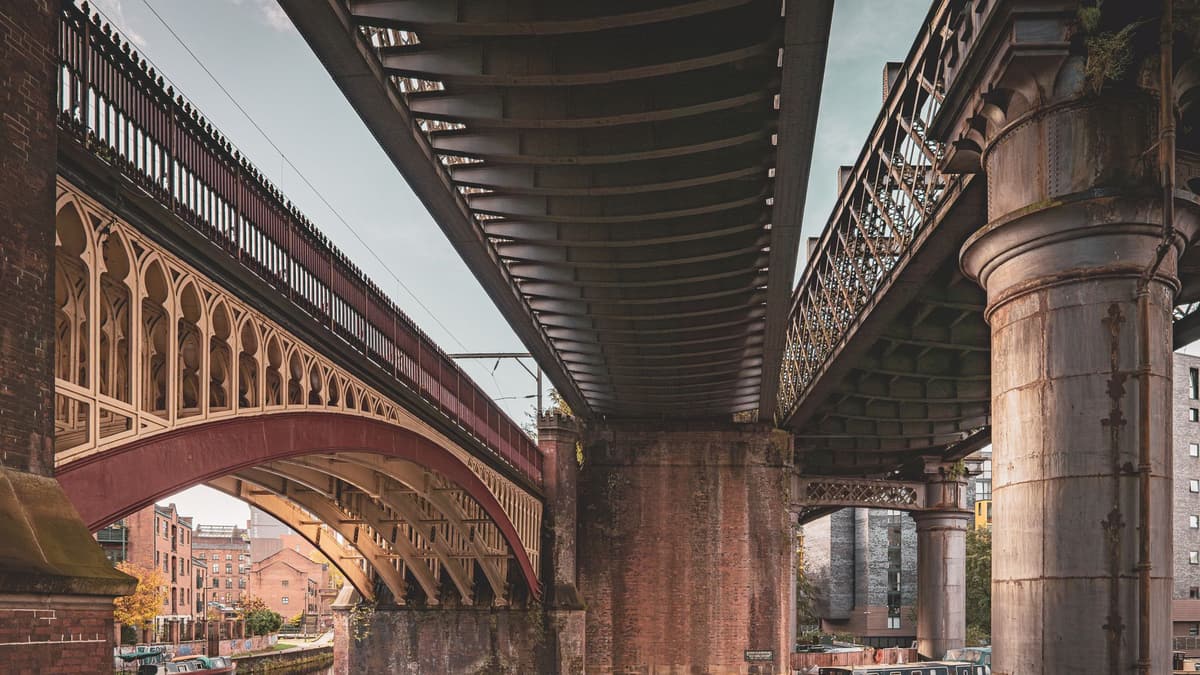
Ancoats is often called the world's first industrial suburb, and standing among these enormous mill buildings, you can see why.
The rest of this stop is in the full audio tour.
Do this walk with other people on the next scheduled tour.
About 2.1 km, roughly 29 minutes at an easy pace · 8 stops
Friends walk freeMore audio tours in Manchester
$6.99City Highlights