
Porto Walking Tour: A Self-Guided Route Down to the Ribeira
Choose how you'll do this walk in our app

 Friends walk free
Every tour also runs as a scheduled group walk you can join in the app.
See the Porto audio tour page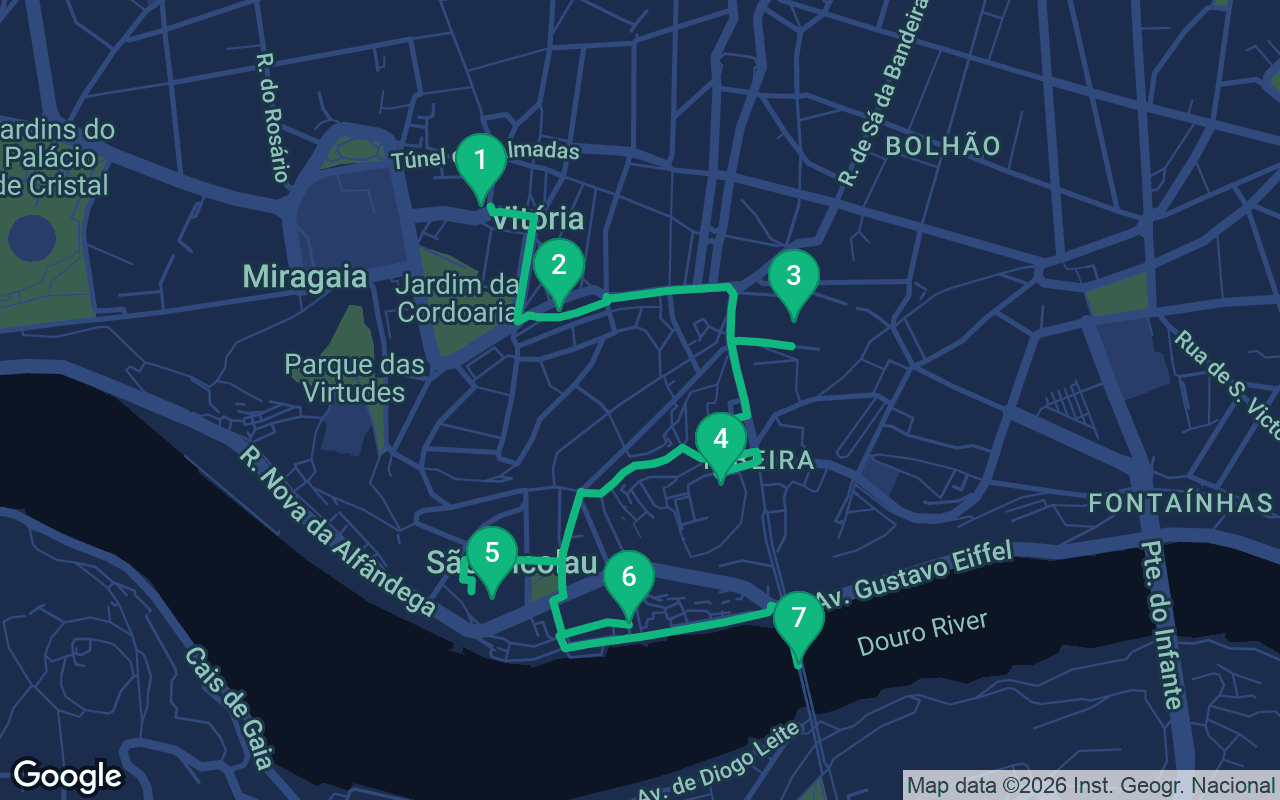
About 3.3 km, roughly 47 minutes at an easy pace.
- 1Carmo Church
- 2Clerigos Tower~€6 · optionalOptional entry ticket, not included
- 3Sao Bento Station
- 4Porto CathedralFull tour
- 5Church of Sao Francisco~€7.50Entry ticket, not includedFull tour
- 6Ribeira SquareFull tour
- 7Dom Luis I BridgeFull tour
Not included in the tour: ~€7.50 entry · ~€6 entry (optional)Average per person. Prices change, so check before you go.
This tour is narrated
Press play on the first 3 stops for a 30-second demo of the narration. In the app, the intro and those 3 stops play in full for free, each one chiming as you arrive. The whole narrated tour is yours for $8.99, a one-time purchase you keep for good.
Works with Garmin, Komoot, Strava, OS Maps and any GPX app.
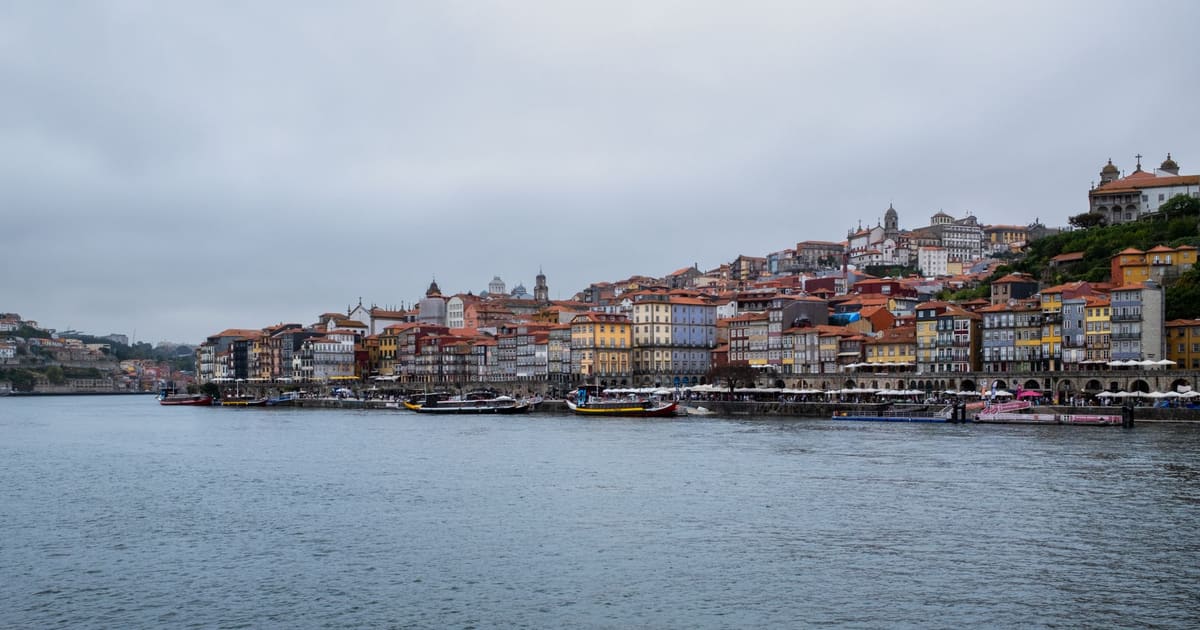
Porto is a city that tips downhill toward its river, and the smartest way to see it is to start up top and let gravity do the work. This route begins among the tiled churches of the upper town and drops through the old center to the Ribeira, the famous row of houses stacked along the Douro. It is a great pick for self-guided walking tours, because almost the whole thing runs downhill and ends with a riverside reward. Count on a little over three kilometers, with the descent doing most of the effort for you.
Before you set off
Give yourself about two hours, more if you plan to linger by the river at the end, which you should. The walk drops steadily downhill, which is easy on the legs going but means the streets can be steep and slick, so wear shoes with a bit of grip. The upper town gets the morning sun while the riverside stays shaded, so an earlier start keeps you comfortable. Porto weather turns quickly, so a light layer is wise even on a bright day. And bring a little appetite, because the Ribeira at the end is made for sitting and watching. Porto is a working city as much as a pretty one, so expect laundry strung between windows and trams rattling past baroque churches, which is exactly what gives it its character. The tiled churches you pass are a thread running through the whole walk, so it is worth learning to spot the blue and white panels, called azulejos, on facades and inside entrance halls. Take the hills slowly, drink the views in, and treat the descent as the city gradually revealing its river to you.
Carmo Church
Start at the Carmo Church in the upper town, where one whole side wall is covered in a huge panel of blue and white tiles. Those tiles, telling a religious scene across the entire flank of the building, are the thing to see, and they are best in the morning light. Look closely and you will notice the church is two churches side by side, separated by one of the narrowest houses you will ever see, squeezed into the gap between them. Stand across the little square to take the whole tiled wall in at once. This upper corner of the city is calmer than the streets below, a gentle place to begin. When you are ready, it is a two minute walk to the tower that dominates this part of town.
Clerigos Tower
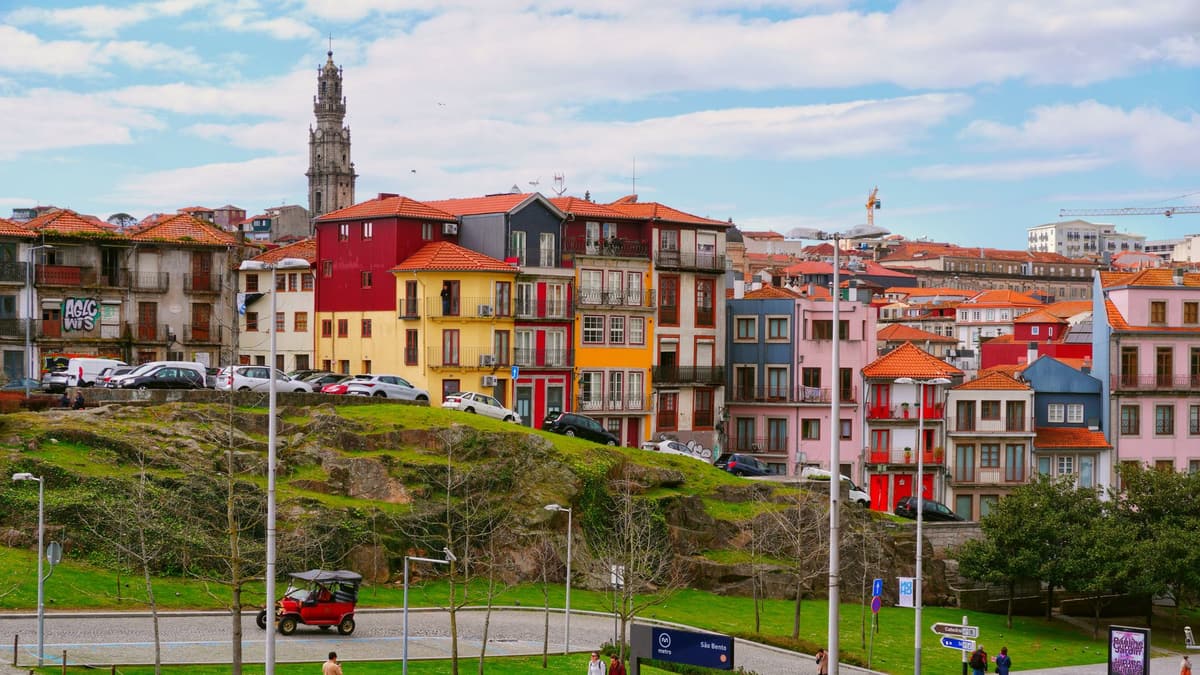 The Clerigos Tower is the tall baroque bell tower that you can see from half the city, a slender stone finger pointing up above the rooftops. The church at its base is worth a glance, but the tower is the landmark, and if you have the legs the climb up its winding stair gives you the best rooftop view in Porto. Even from the ground it is a fine sight, all carved stone and height. This is the moment to get your bearings, because from here the city falls away downhill toward the river you are heading for. Walk around the base to see how the tower anchors the whole quarter, and notice how you can use it to navigate all day, since it pops back into view from half the streets in the city. Right next door stands one of the most famous bookshops in the world, a small neo gothic hall with a swooping red staircase inside, worth a peek through the door even if the queue to enter is long. Then start downhill, following the streets as they drop toward the old center and the grand station below.
Sao Bento Station
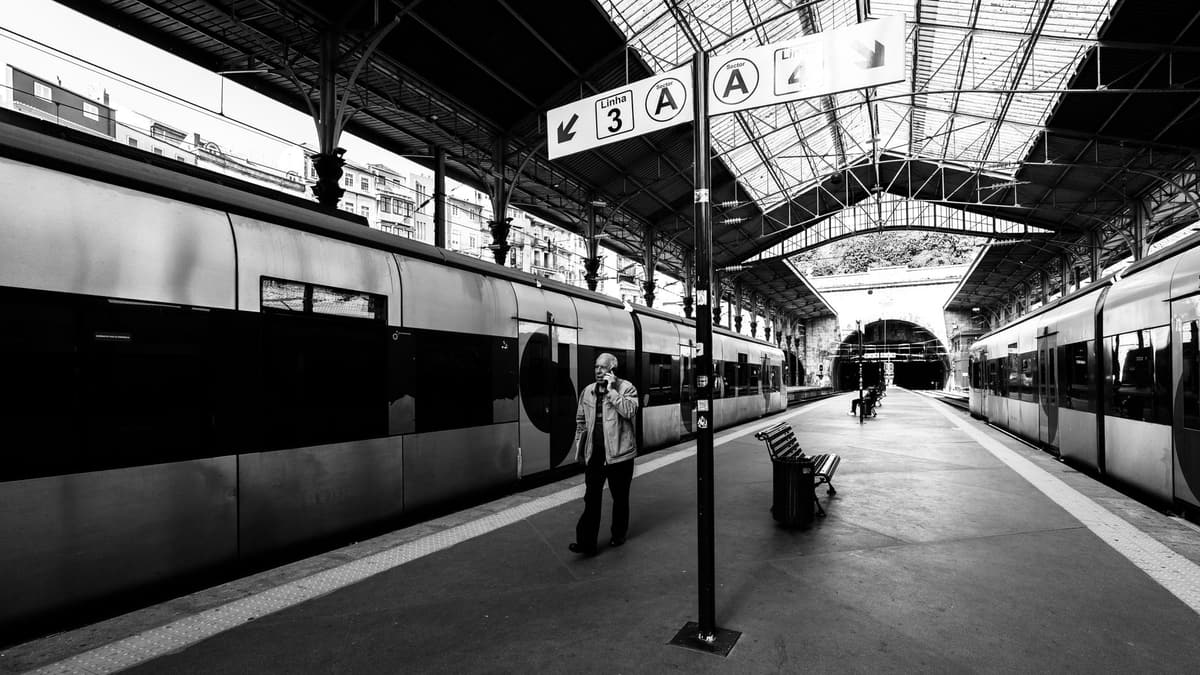
Sao Bento looks like an ordinary railway station from the street, but step inside the entrance hall and you walk into one of the most beautiful rooms in the country. The walls are covered floor to ceiling in blue and white tiles showing scenes from Portuguese history, thousands of them, glowing in the light from the high windows. It is free to walk in and look, and it is easy to spend fifteen minutes just reading the panels. Trains still come and go beyond the hall, which makes the beauty of the room feel casual and alive rather than roped off. This is a genuine highlight, so do not rush it. Look for the big panels showing old battles and royal weddings, and the frieze running high around the top that traces the story of transport, from oxcart to the railway that the station was built to serve. It is a rare thing, a piece of grand public art you pass through on the way to catch a train, and locals barely glance at it. When you step back out, the old cathedral sits on the higher ground just above, a short climb to your next stop.
The full tour continues in the app
- Distance
- 3.3 km
- Walking
- 47 min
- Steps
- ~4,600
- Narration
- 10 min
What's included
- All 7 stops, fully narrated
- Works offline once downloaded in the app
- Friends walk free one purchase covers everyone on your walk
Our tours are made to be meditative and immersive: you keep moving and simply listen. They're always better together, and the app plays the narration in sync, so you, your partner and your friends hear every stop at the same moment.
Porto Cathedral
The cathedral, the Se, is the fortress like church that crowns the oldest part of the city. It is heavy and solid, built more like a stronghold than a chapel, which tells you how old and how defensive this hilltop once was.
The rest of this stop is in the full audio tour.
Church of Sao Francisco
Lower down toward the river you reach Sao Francisco, a plain gothic church from the outside that hides something remarkable within.
The rest of this stop is in the full audio tour.
Ribeira Square
The Ribeira is the postcard of Porto, the row of tall narrow houses in faded colors stacked up the slope right at the water's edge.
The rest of this stop is in the full audio tour.
Dom Luis I Bridge
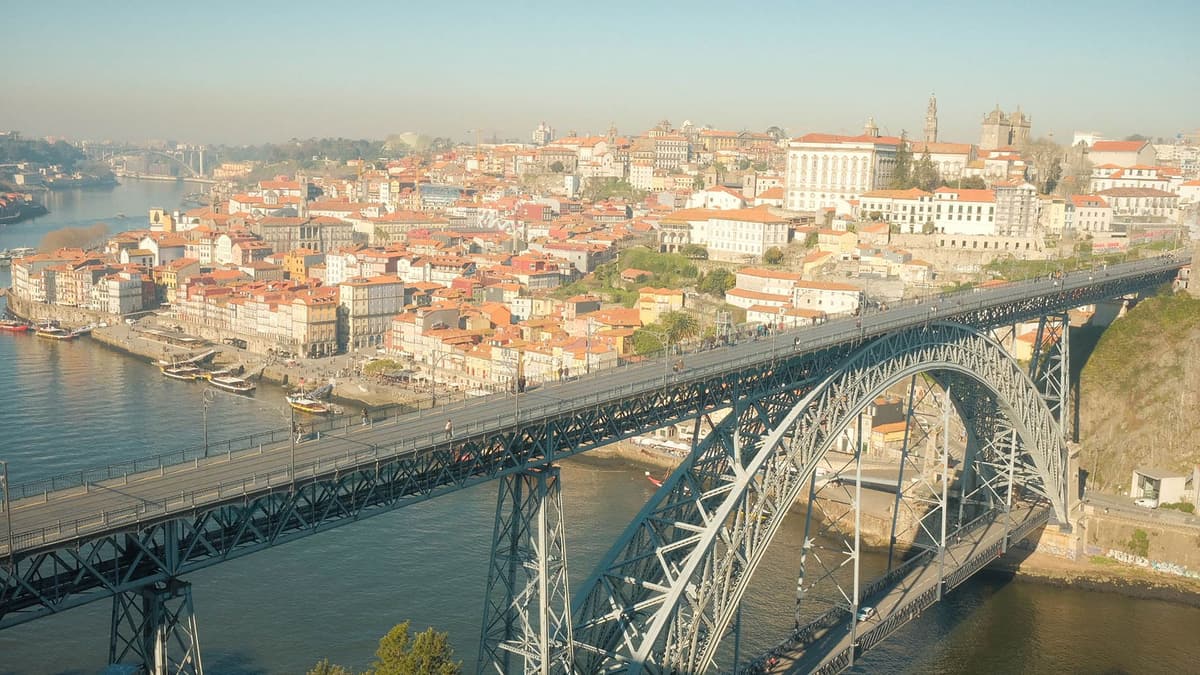
Finish at the Dom Luis I Bridge, the huge iron arch that leaps across the Douro in a single span.
The rest of this stop is in the full audio tour.
Do this walk with other people on the next scheduled tour.
About 3.3 km, roughly 47 minutes at an easy pace · 7 stops
Friends walk free