




 $8.99City Highlights
Honolulu Audio Walking Tours
Self-guided, narrated walks through Honolulu. Buy a tour once, download it, and hear the story at each stop while you walk at your own pace.
Tours from $8.99
Friends walk free. One purchase covers everyone on your walk. Start the tour, invite your friends to join, and it plays on every phone in your group.
5.0 on Google Play
Honolulu audio tours
Each tour is a mapped route with narration at every stop. Buy it once and it is yours to keep, no subscription.
$8.99City Highlights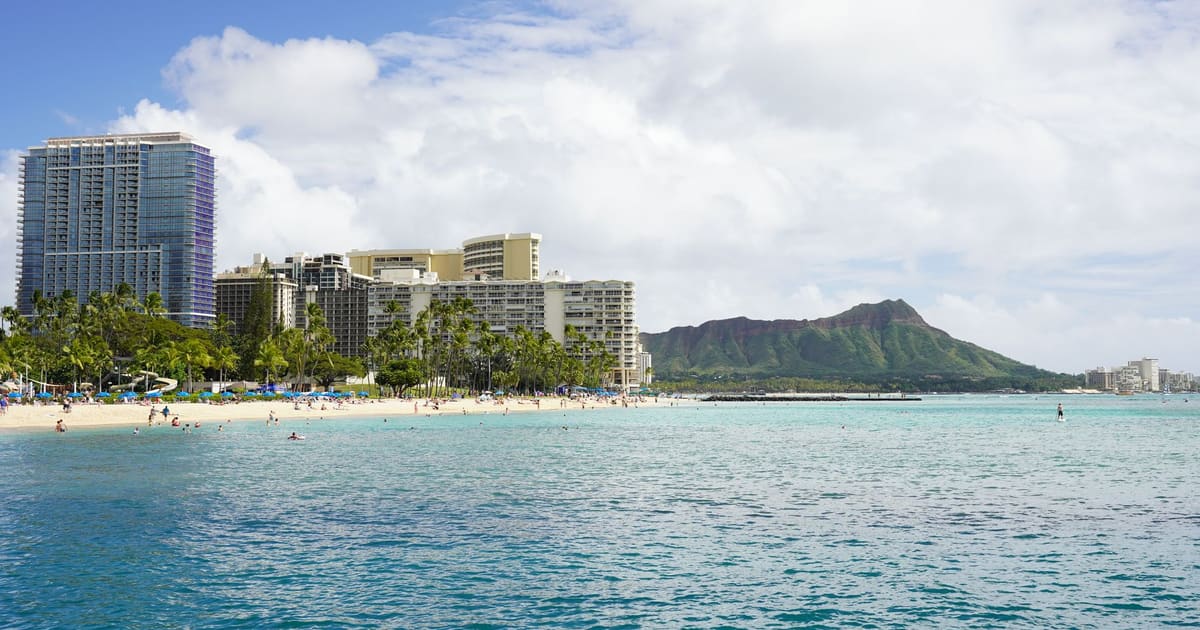 $9.99City Highlights
What to expect on a Honolulu audio walking tour
A Honolulu audio walk splits neatly into two moods, the fish markets and royal history of downtown and the long curve of Waikiki's shoreline, with narration timed to each stop so you can follow either story without losing your place in a crowded market or on a packed beach path.
The Royal Downtown Walk starts at a wooden Shinto shrine beside Nuʻuanu Stream, crosses through the markets and old theater of Chinatown, then passes Washington Place, the home of Hawaii's last queen, before reaching ʻIolani Palace and the coral walled Kawaiahaʻo Church. It covers 2.8 kilometers, about 40 minutes of walking, on flat, level ground.
The Waikiki Beachfront Walk follows the shore from Fort DeRussy past the pink Royal Hawaiian Hotel and the giant banyan tree at the International Market Place, then on past Duke Kahanamoku's statue and the small heritage center at St. Augustine by-the-Sea, finishing at Kapiʻolani Park and the Waikiki Aquarium at the foot of Diamond Head. It covers 3.8 kilometers, about 52 minutes, and stays close to the water the entire way.
Together the two walks cover a little over six and a half kilometers of flat, easy ground, one tracing the rise and fall of the Hawaiian Kingdom, the other tracing how a stretch of fishponds and marsh became the world's best known beach resort. Both stay close enough to the water and the shade that you can slow down whenever something catches your eye.
Where to walk in Honolulu
A few of the stops you will pass, and why they are worth slowing down for.
Waikiki Beach and Diamond Head
Waikiki's shoreline curves in front of a line of hotels and palm trees with Diamond Head rising at its far end, the extinct volcanic cone that appears in almost every postcard of the island. The beach itself sits on land that was once fishponds, taro patches and marsh, drained and filled in the early twentieth century after the Ala Wai Canal was dug along its inland edge. Walking the beach path you'll pass surfers paddling out at the same breaks where Hawaiian watermen revived the sport in the early 1900s, sending it around the world. Hawaiians call the mountain Lēʻahi, usually explained as the brow of the ʻahi, a tuna, for its shape against the sky.
The Royal Hawaiian Hotel
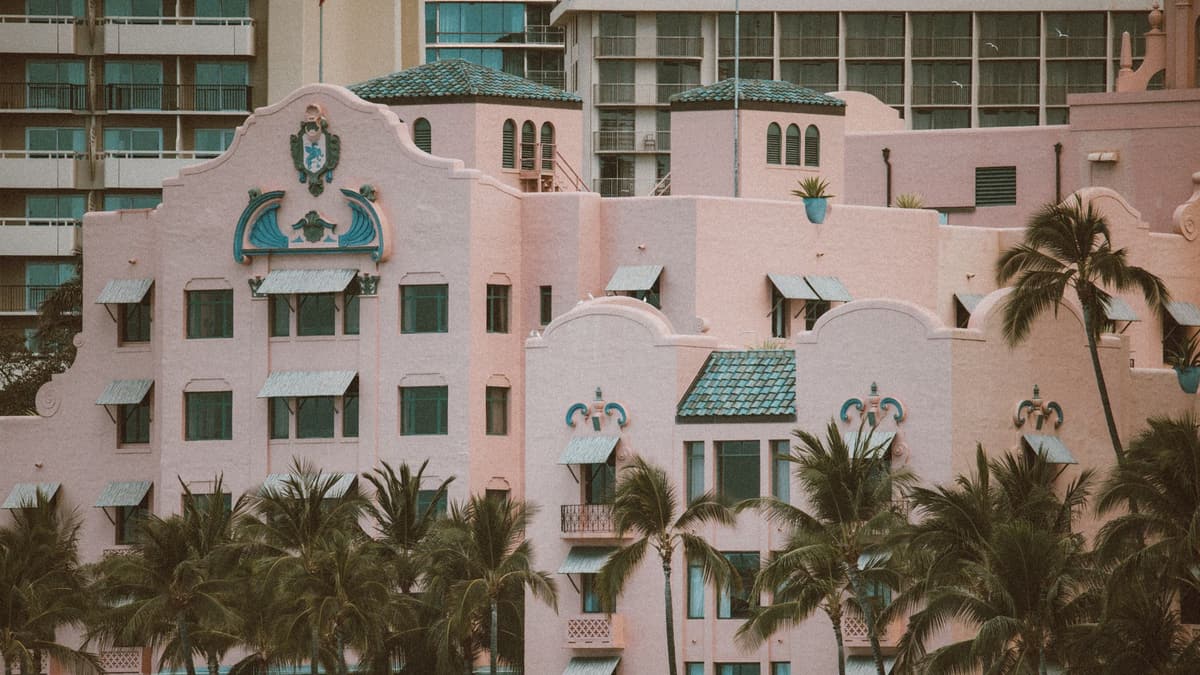
The Royal Hawaiian is impossible to miss, a pink Spanish and Moorish confection of arches and stucco towers set back in its own gardens right on the beach. It opened in 1927 as the grand arrival point for wealthy travelers sailing over from California on ocean liners, and it earned the nickname the Pink Palace of the Pacific almost immediately. The ground beneath it carries an older story too: this was once Helumoa, a royal grove of coconut palms where the chiefs of Oʻahu kept their homes, and a few of those palms still stand beside the shopping center just inland. During the Second World War the Navy leased the whole hotel as a rest camp for sailors on leave between patrols.
St. Augustine by-the-Sea
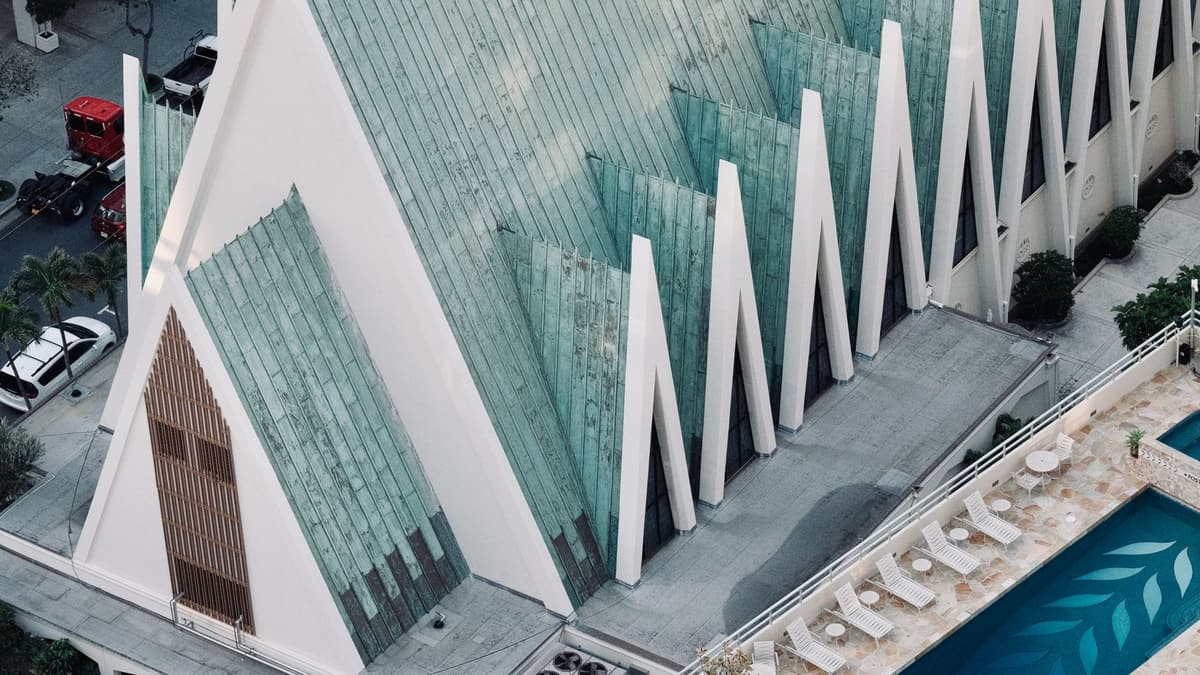
Across the avenue from the beach, St. Augustine by-the-Sea is a modern Catholic church with a steeply pitched front that looks almost out of place among the surf shops and hotels around it. A small heritage center beside it tells the story of two saints connected to Hawaii, Father Damien and Mother Marianne Cope, who cared for patients with Hansen's disease sent to the isolated peninsula of Kalaupapa on Molokaʻi. Damien built homes and a church there before he caught the disease himself and died in 1889, and Marianne continued the work for decades after. Both were later declared saints, and the center is a quiet stop in the middle of a very busy stretch of beach.
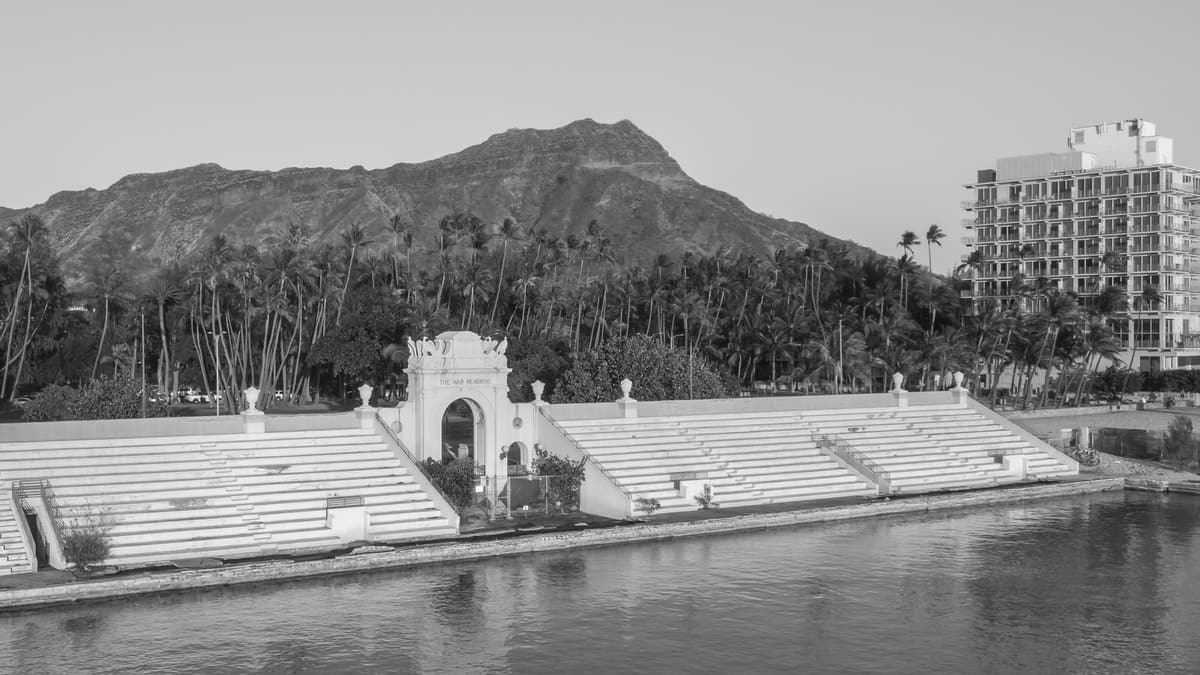
The Waikiki War Memorial Natatorium
Near the aquarium at the Diamond Head end of the beach stands the crumbling arch of the Waikiki War Memorial Natatorium, a saltwater pool built in 1927 to honor the people of Hawaii who served in the First World War. It opened to huge crowds, with the swimmer Duke Kahanamoku among those in the water on opening day, and for decades it was a gathering place for the whole island. The pool has been closed since 1979, and what to do with the aging structure has been debated ever since, but the arch and the stepped seating still stand looking out over the water. Beyond it the beach narrows into a quieter stretch that locals favor for an early morning swim.
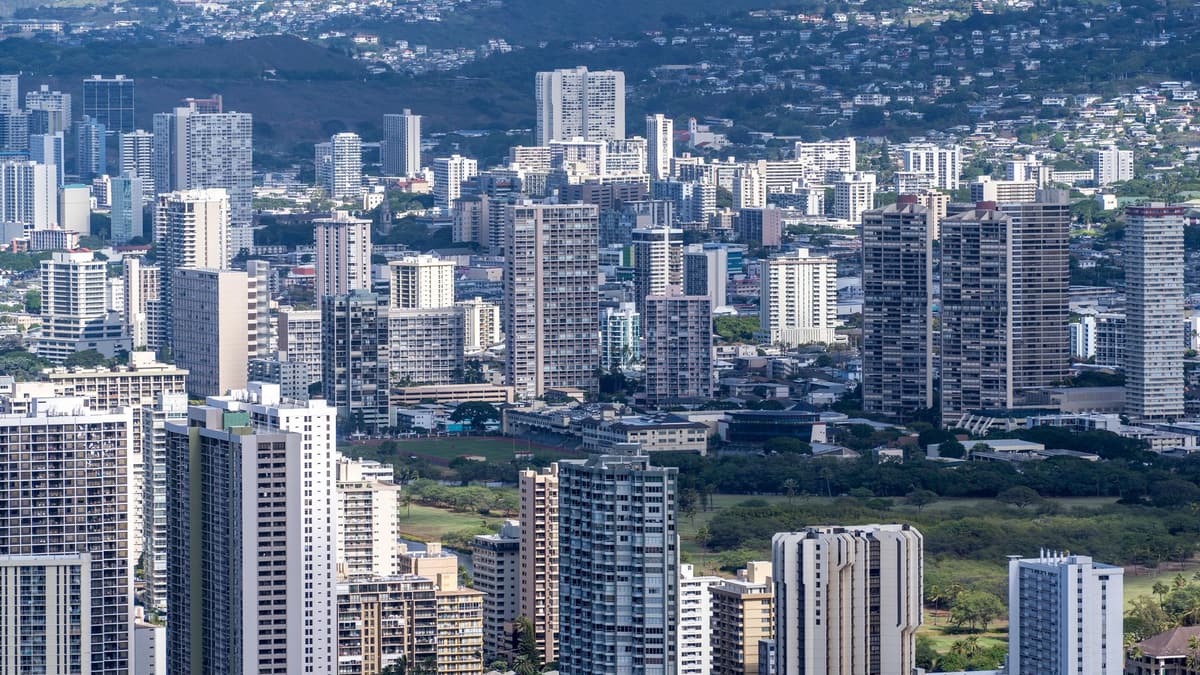
Downtown Honolulu
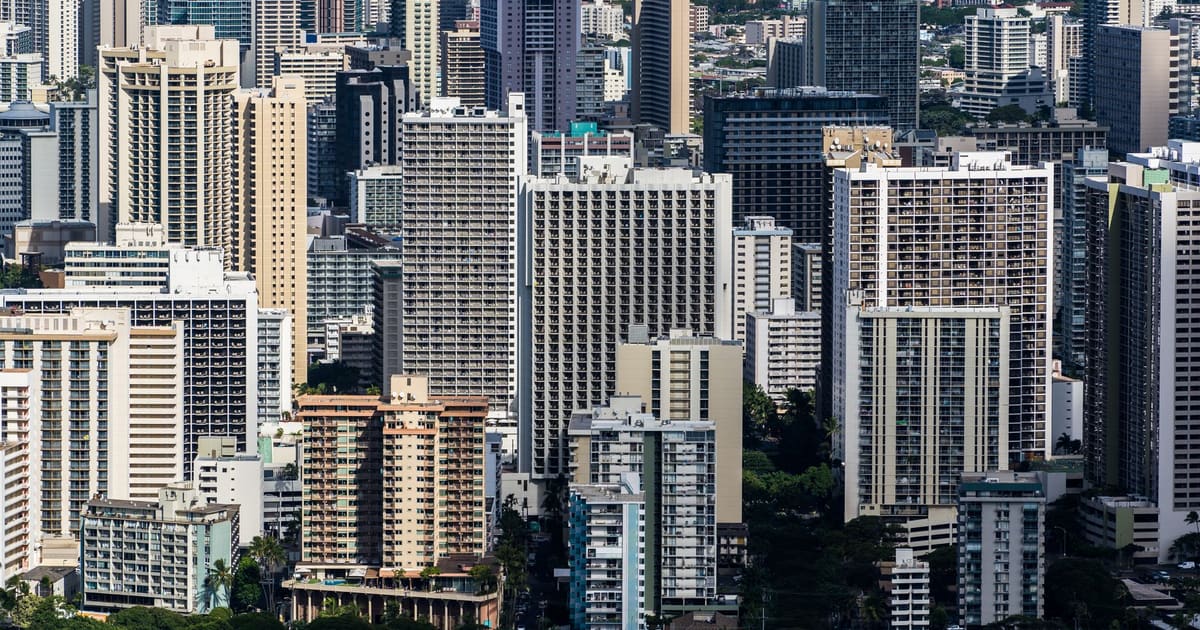
Downtown Honolulu sits only a few minutes from Waikiki by bus but feels like a different city, a compact grid of harbor warehouses, government buildings and the old Chinatown market streets backed by green mountains. Most visitors never make it here, which leaves the markets, the old Hawaii Theatre and the royal sites around ʻIolani Palace feeling far less crowded than the beach a few miles away. It's also the part of the island where its history actually happened: the overthrow of the Hawaiian Kingdom, the rise of Chinatown's immigrant merchants, and the home of Hawaii's last queen all sit within a few blocks of each other here.
Get the Audio Tour in 3 Simple Steps
All in the free Walk With Me app, and the first stops of every tour are free to try.
Tap the Gold Headphones and Pick a Tour


01
Walk It Solo or Invite Someone


02
Press Play and Walk


03
Handcrafted for Your Time in the City
These tours aren't a checklist of sights. They're made to be walked slowly, headphones on, eyes on the city.
Meditative and Immersive
Each story is told where it happened. The app chimes when you reach a stop, one tap starts the story, and the stretch between stops is yours to take in at your own pace.
Handcrafted With Care
We choose every route and every stop ourselves and shape each story with care, so the time you have in the city goes to the places most worth seeing.
Better With Someone
Every walk is better with someone beside you, so if you can bring a friend, we really hope you do. That's why one purchase covers everyone you invite: they join your tour free.