
 $14.99Film & Fiction
NYC Central Park Audio Walking Tour (Self-Guided)
Choose how you'll do this walk in our app

 Friends walk free
Every tour also runs as a scheduled group walk you can join in the app.
More audio tours in New York City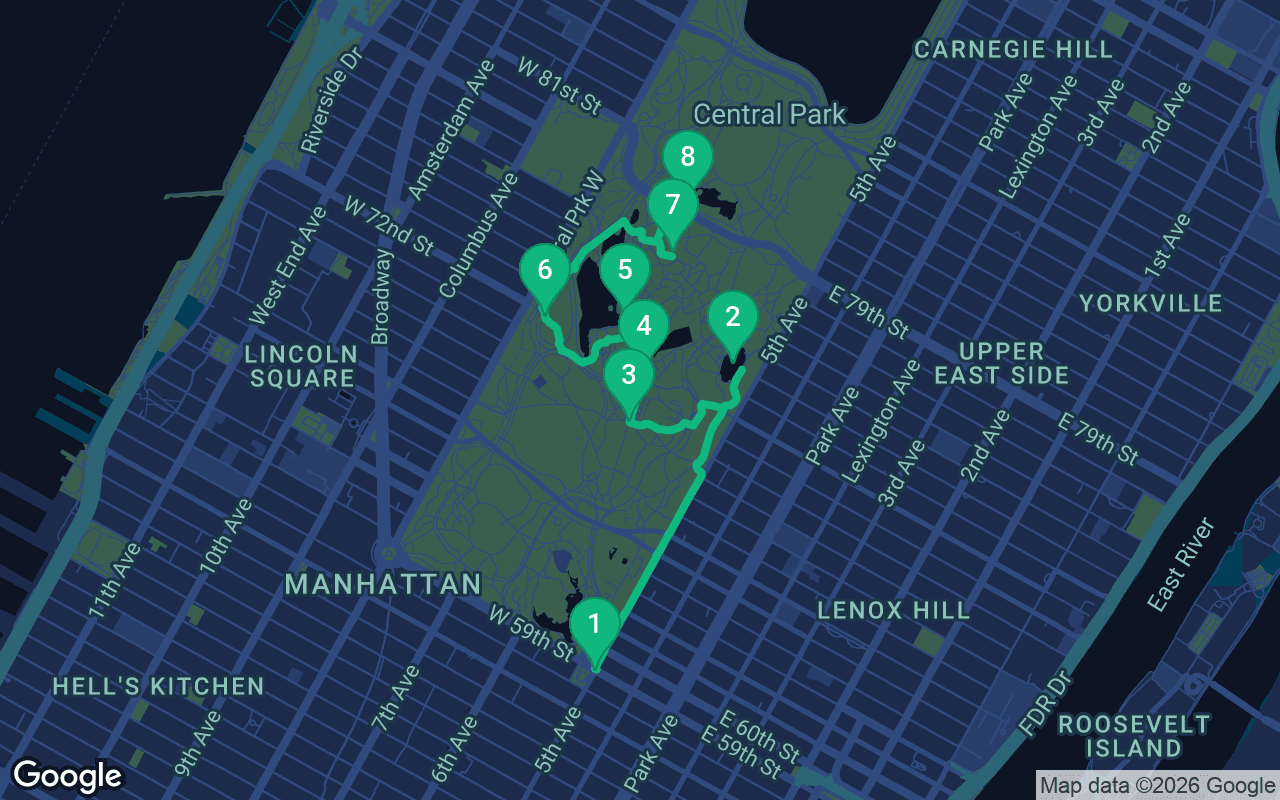
About 2.6 km, roughly 37 minutes at an easy pace.
- 1Conservatory Water
- 2The Mall
- 3Bethesda Terrace
- 4Bow BridgeFull tour
- 5Strawberry FieldsFull tour
- 6The RambleFull tour
- 7Belvedere CastleFull tour
This tour is narrated
Press play on the first 3 stops for a 30-second demo of the narration. In the app, the intro and those 3 stops play in full for free, each one chiming as you arrive. The whole narrated tour is yours for $7.99, a one-time purchase you keep for good.
Works with Garmin, Komoot, Strava, OS Maps and any GPX app.
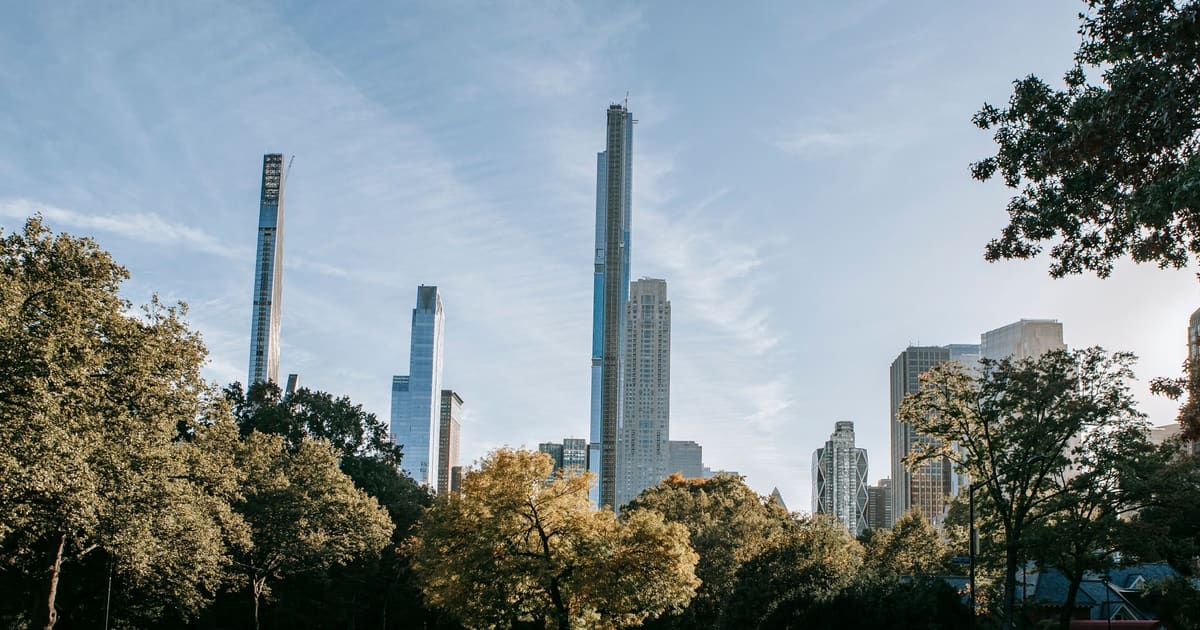
Central Park looks like a piece of countryside that the city grew around, but every rock, lake and winding path in it was planned. In 1858 Frederick Law Olmsted and Calvert Vaux won a competition to design a park on this rough, swampy strip of Manhattan, and their crews spent years moving earth, blasting rock and planting trees to make it look as if nature had done the work. This walk takes you through the heart of their design, from a little pond where model boats sail, along the great elm avenue to the angel fountain and the lake, across to the John Lennon memorial, into the woods of the Ramble and up to a small stone castle on a rock. It is about three kilometers, a little under two miles, and one of the gentlest self-guided walking tours you can take in New York.
Before you set off
Give yourself about two hours at an easy pace, longer if you rent a boat, sit by the water or follow a bird through the woods. Paths are mostly paved, with some packed earth, rocky steps and short climbs in the Ramble and up to the castle, so wear comfortable shoes with a bit of grip, especially after rain. The park drives are shared with fast cyclists and runners, so look both ways every time you cross one. Mornings are calm and best for birds; afternoons on weekends bring musicians, skaters and crowds to the Mall and the terrace. There is plenty of shade under the trees, and benches everywhere. The Ramble is lovely by day but best left before dusk. Restrooms, cafes and the boathouse keep their own seasonal hours, and the model boats and rowboats are only out in the warmer months, so check before you go if they matter to you. The walk ends near the middle of the park, a short stroll from the subway lines on either side.
Conservatory Water
Stand at the stone rim of this neat oval pond on the east side of the park and watch the water. On a fine day small sailboats, many of them remote controlled, lean in the breeze while their owners steer from the edge. The pond's name is a leftover: Olmsted and Vaux planned a grand glass conservatory here, and it was never built. The boats came instead, and they have been part of the place for over a century. In E. B. White's book Stuart Little, the mouse hero races a model yacht right here. Two famous sculptures make this corner a favorite with children. At the north end, Alice sits on a giant mushroom with the Mad Hatter, the White Rabbit and the Cheshire Cat around her, a bronze from 1959 that thousands of small hands have polished to a shine. On the west side, Hans Christian Andersen sits on a bench with a book open on his lap and a bronze duckling at his feet, and in summer storytellers still read to children beside him. Look across the pond to the small brick boathouse, where model boats are kept and sometimes rented. When you are ready, walk west and a little south from the pond, crossing the park drive with care, for about six or seven minutes until you reach a long avenue of tall elms.
The Mall
 You are standing on the Mall, and you will notice right away that it is straight. In a park designed almost entirely in curves, this broad promenade is the one deliberate exception, a formal walk where nineteenth-century New Yorkers came to stroll in their best clothes and see each other. Look up. Four rows of American elms line the walk, and their branches meet overhead in a high green arch. These elms are rare survivors. Dutch elm disease killed most of the great elms across North America, and Manhattan's island position and watchful gardeners have helped protect this stand, one of the largest left on the continent. At the southern end, called Literary Walk, statues of writers watch the crowd, among them Shakespeare, Robert Burns and Walter Scott. Near the northern end stands the Naumburg Bandshell, a stone stage where concerts have been held for a hundred years. On weekends the Mall fills with portrait artists, musicians, bubble makers and roller skaters, a tradition of dancing on wheels that goes back decades here. Walk north along the elms toward the end of the avenue. At the top, a couple of minutes on, the avenue runs into a wide stone staircase that leads down beneath the road.
Bethesda Terrace
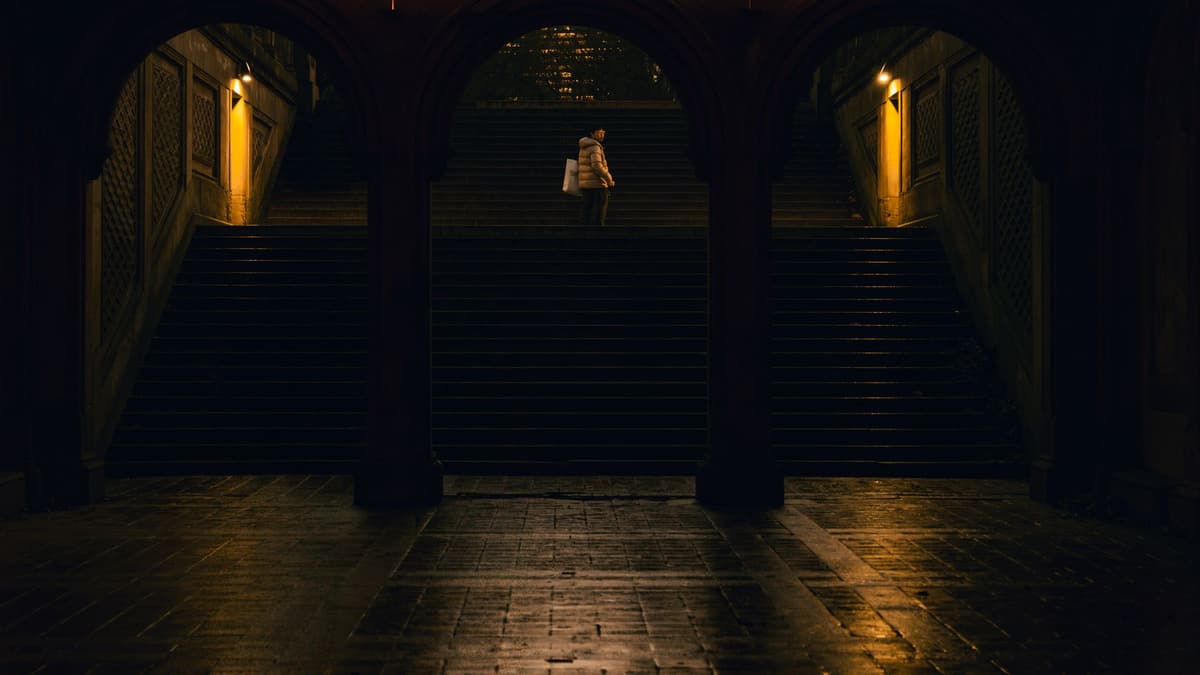
Come down the stairs and step into the arcade beneath the road. Stop and look up. The ceiling is covered with thousands of colorful ceramic tiles made by the English firm Minton, thought to be the only ceiling in the world made of them. They were taken down and restored by hand, and musicians love this space for its echo. Walk through and out onto the lower terrace by the lake. In the center stands the Bethesda Fountain, topped by a winged bronze angel holding a lily. She is the Angel of the Waters, unveiled in 1873, and her sculptor, Emma Stebbins, was the first woman to receive a public art commission in New York City. The angel refers to a Bible story about a healing pool in Jerusalem called Bethesda, and she was meant to celebrate the clean water that had reached the city through the Croton Aqueduct in 1842, after years of relying on dirty wells and polluted ponds. Now look at the stonework on the staircases and walls. The carvings show birds, fruit, flowers and the seasons, designed by Jacob Wrey Mould. This terrace was planned as the park's grand meeting place, and it still works that way. Walk to the left along the lake's edge, westward, for about five minutes until a pale, curving bridge appears on your right.
The full tour continues in the app
- Distance
- 2.6 km
- Walking
- 37 min
- Steps
- ~3,600
- Narration
- 13 min
What's included
- All 7 stops, fully narrated
- Works offline once downloaded in the app
- Friends walk free one purchase covers everyone on your walk
Our tours are made to be meditative and immersive: you keep moving and simply listen. They're always better together, and the app plays the narration in sync, so you, your partner and your friends hear every stop at the same moment.
Bow Bridge
Walk out to the middle of Bow Bridge and stop.
The rest of this stop is in the full audio tour.
Strawberry Fields
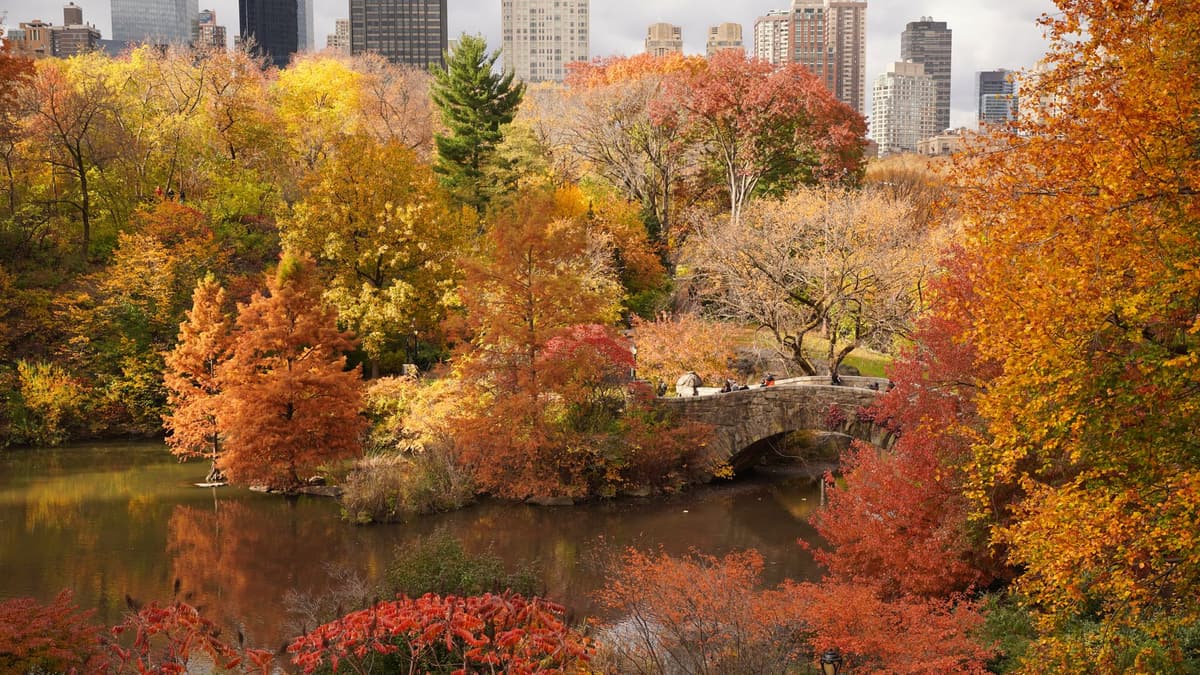
You are in Strawberry Fields, a small, teardrop-shaped garden named after the Beatles song, and dedicated to John Lennon. Look past the trees and across Central Park West to the tall, gabled building with dark stone walls and a deep arched gate.
The rest of this stop is in the full audio tour.
The Ramble
You have entered the Ramble, some three dozen acres of woods, rock, little streams and twisting paths, and within a few steps the city disappears. It feels wild, but it was designed as carefully as the formal Mall.
The rest of this stop is in the full audio tour.
Belvedere Castle
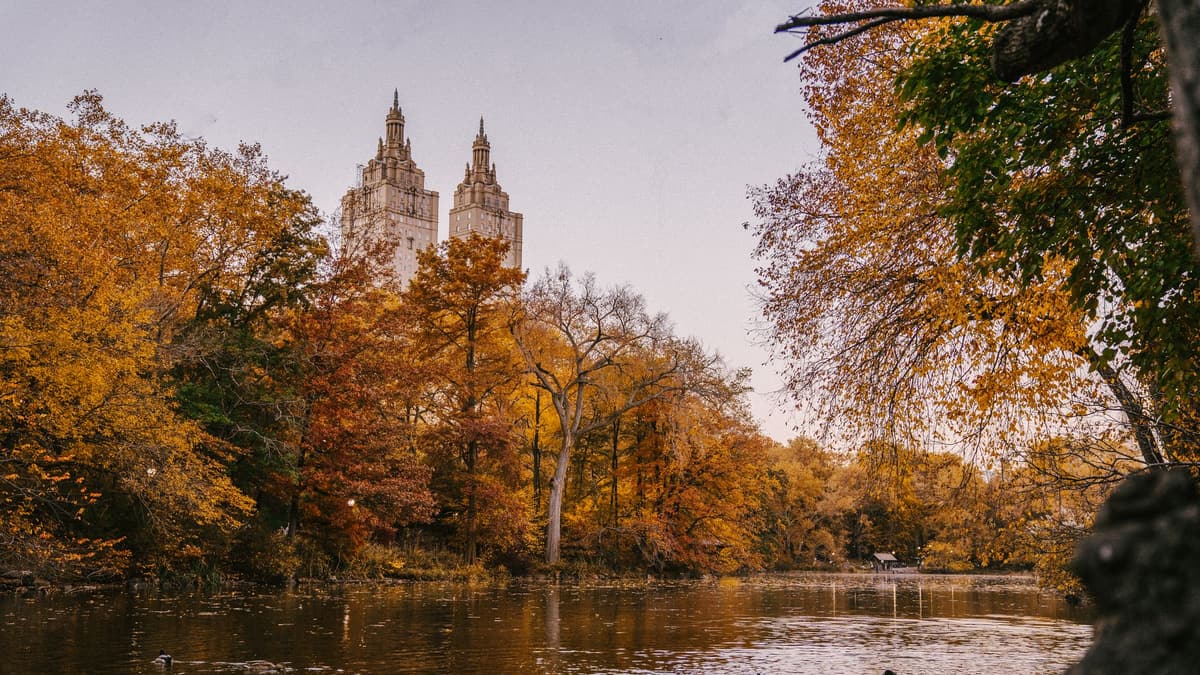
Climb up onto the terraces of Belvedere Castle and stand at the wall. The small gray tower and turrets look like something from a storybook, and that is exactly what they were meant to be.
The rest of this stop is in the full audio tour.
Do this walk with other people on the next scheduled tour.
About 2.6 km, roughly 37 minutes at an easy pace · 7 stops
Friends walk freeMore audio tours in New York City
$14.99Film & Fiction $16.99Film & Fiction
 $15.99Film & Fiction
 $17.99Film & Fiction
 $14.99Film & Fiction
 $8.99City Highlights
 $9.99City Highlights