October 16, 2026 · 7 min read
Passing Dogs on Narrow Sidewalks
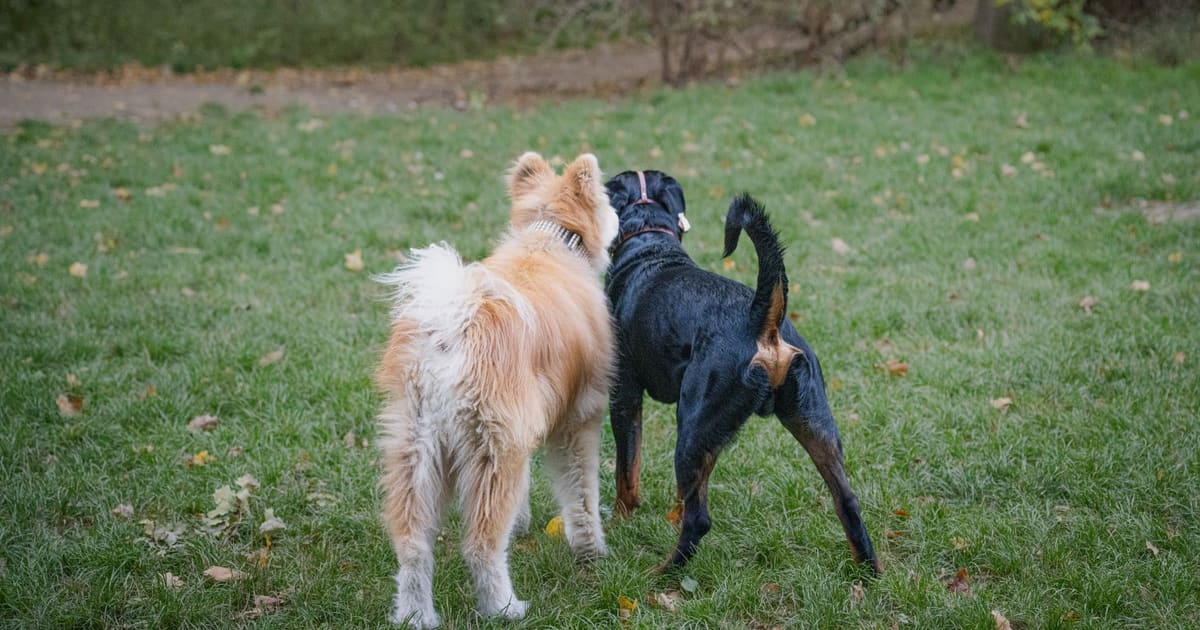
Master dog leash etiquette on narrow sidewalks. Learn spatial tricks, decision rules, and clear communication to pass other dogs without tension.
August 19, 2026 · 9 min read
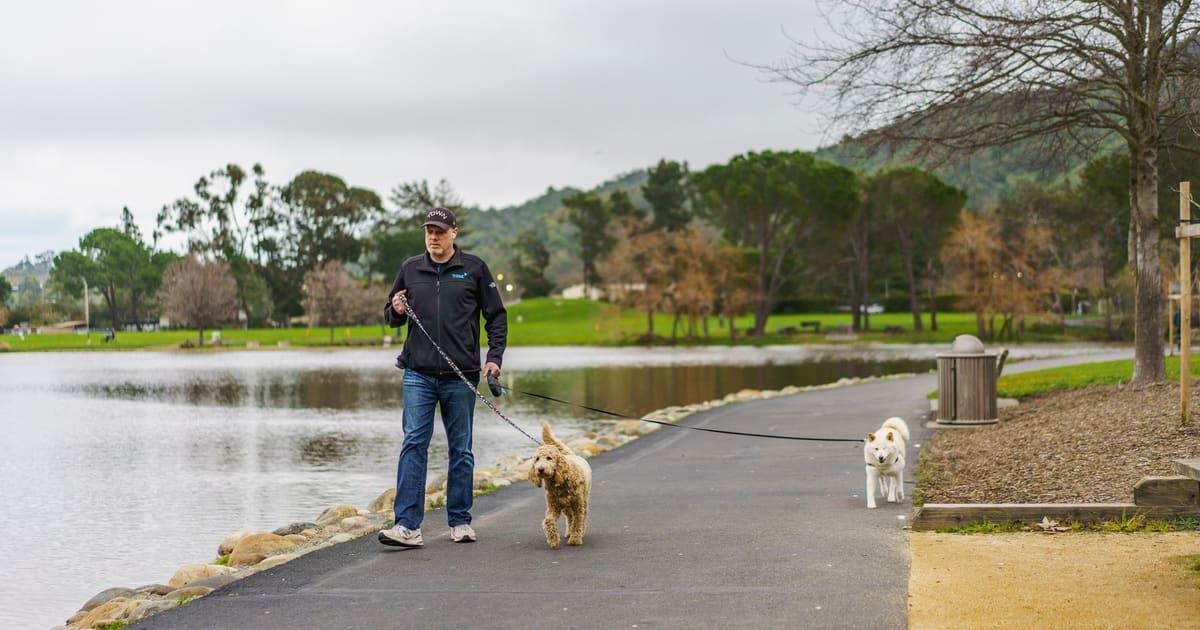
I was walking down the canal path last Tuesday when a golden retriever on a fifteen-foot retractable leash wrapped itself twice around a confused toddler. The kid was wearing a bright blue jacket, clutching a half-eaten biscuit, and suddenly found himself anchored to an excited seventy-pound dog. The owner was staring at their phone, entirely unaware of the chaos behind them. It was a classic reminder of why we need a clear code of conduct on our paths. If you are out walking your pup, understanding proper dog walking etiquette is what keeps our daily strolls safe, fun, and stress-free for both the humans and the dogs we share the pavement with. We share these public spaces with runners, parents, cyclists, and other dogs, so a little awareness goes a very long way.
Let's talk about the dreaded retractable leash. I see them everywhere in city parks and on narrow suburban sidewalks, and they always make me nervous. On paper, they seem like a great invention. Your dog gets to sniff fifteen feet away, and you don't have to jog to keep up. In reality, they are a safety hazard on any shared path. The thin cord is nearly invisible to cyclists zooming by at fifteen miles per hour. If your dog bolts after a squirrel, that thin nylon line can easily wrap around someone's leg, causing severe friction burns or even tripping them onto the hard pavement. I've seen it happen, and it is never pretty.
When you are walking in public spaces, stick to a standard four-foot or six-foot flat leash. This gives you physical control over your dog. If a distraction appears, you don't have to frantically fumble with a plastic lock button while your dog is already ten feet ahead of you. A shorter leash also signals to other walkers that you have your dog under control. It builds trust. Save the long, roaming lines for wide-open fields or private yards where you aren't sharing the space with runners, kids, and other pets. Trust me, your wrists and your neighbors will thank you.
Also, think about the mechanics of a retractable leash. The constant tension teaches your dog to pull. They learn that if they pull harder, the leash extends. A flat leash teaches them boundaries. You want a loose-leash walk where your dog walks calmly by your side, not a constant tug-of-war where your arm is getting yanked out of its socket. It makes the entire experience much more peaceful for both of you.
You're walking your incredibly social lab mix, and you see another dog approaching. Your immediate instinct might be to let them nose-to-nose greet because "he's friendly!" is your default setting. Please don't do this without asking first. Shouting "he's friendly!" from thirty yards away is not a green light. The oncoming dog might be recovering from hip surgery, or they might be a reactive rescue dog in training. When you allow your dog to rush up to a tense, leashed dog, you are setting up a potential fight.
Leashes change dog psychology. When a dog is restricted by a leash, they know they cannot run away if they feel threatened. This makes them much more likely to react defensively with a growl or a snap. Even the most docile dog can snap when cornered by an eager stranger.
The polite move is to check in from a distance. A simple, "Is it okay if they say hi?" works wonders. If the other owner says no, or hesitates, just pull your dog to the side and keep walking. No hard feelings. Some dogs need space, and that is completely fine. If they do say yes, keep the greeting short. The three-second rule is a solid guideline. Let them sniff, count to three, and then cheerfully call your dog away before the tension has a chance to build up. This prevents the play-sniff from turning into a dominance struggle.
Sometimes, the best interaction is no interaction at all. It took me three years of dog owning to finally accept that simple truth.
Paths are shared systems, and we aren't the only ones using them. When you walk a dog, you occupy a lot of horizontal space. If your dog is sniffing the grass on the left side of the path and you are walking on the right side, you have essentially created a clothesline across the trail. A fast-moving cyclist or a runner coming from behind won't see that thin leash until it is too late. This is how serious accidents occur on municipal trails, and the dog is almost always the one who gets hurt worst.
Keep your dog on your right side, closest to the grass, while you walk on the left of the dog. This positions your body as a natural shield between your pet and the passing traffic. When you hear a bike bell ding behind you, gently pull your dog closer to your leg. Don't panic, just shorten the lead and make space. It keeps your dog safe from getting clipped by a pedal, and it lets the cyclist pass without having to slam on their brakes.
Also, pay attention to your surroundings. If you have noise-canceling headphones cranked to max volume, you won't hear the cyclist shouting "on your left!" as they approach. Keep one ear free or keep the volume low enough that you can hear ambient sounds. Being aware of your environment is fifty percent of the battle when it comes to trail safety.
Nothing ruins a great walk faster than stepping in a fresh pile of mud that turns out not to be mud. We all know we need to pick up after our dogs. Yet, some owners still leave the mess behind if they think no one is watching. Or worse, they bag the poop in a bright green biodegradable bag and then hang it from a tree branch like some kind of terrible Christmas ornament. The logic is usually "I'll grab it on my way back," but half the time, people forget, or they take a different route back.
Let's be completely honest here. Leaving a plastic bag on a bush is actually worse than just leaving the poop on the ground. Raw poop eventually washes away with the rain, but that plastic bag, even if it is labeled biodegradable, will sit there for months, looking incredibly ugly and polluting the local ecosystem.
Carry a simple plastic holder on your leash so you never run out of bags. If your dog poops, pick it up immediately and carry it to the nearest municipal trash bin. Yes, carrying a smelly bag for half a mile is annoying, but it's part of the deal of owning a dog. If you really hate carrying it, you can buy smell-proof carrying pouches that clip to your leash or backpack. Let's keep our parks clean and beautiful for everyone who uses them.
Not everyone loves dogs, and we need to respect that. A toddler eating an ice cream cone might look like a fun friend to your golden retriever, but to that child, a large animal rushing forward can be terrifying. The same goes for elderly walkers who might lose their balance easily if a dog jumps up to say hello. Some people have deep-seated phobias from past dog bites, and their fear is completely valid. When you see children, elderly folks, or people who look visibly nervous, proactively shorten your leash.
Step off the pavement onto the grass if the path is narrow. Put your dog in a sit-stay position and reward them with a treat while the other person passes. This shows incredible respect for the community. It also trains your dog to remain calm around distractions instead of expecting attention from every stranger.
If someone does express interest in petting your dog, don't just let the dog jump. Ensure your dog is sitting calmly before allowing the interaction. Teach your dog that they only get affection when all four paws are firmly on the ground. It makes your dog a welcome member of the neighborhood rather than a public nuisance.
We've all been woken up at six in the morning by a neighbor's dog barking hysterically at a squirrel. If you are walking your dog during the early morning or late evening hours, you need to be mindful of the noise. Neighborhoods are incredibly quiet during these times, and a dog's bark can echo off houses, waking up sleeping families.
If your dog is a vocal walker, work on quiet cues before you head out. Bring high-value treats like freeze-dried liver or cheese to redirect their attention the moment they start to huff or growl. If they do start barking, don't yell at them to stop. To a dog, your yelling just sounds like you are barking along with them. Instead, calmly but firmly guide them away from the trigger and reward them when they quiet down. Respecting your neighbors' sleep is a fundamental part of local community living.
It is a classic weekend scene. You walk down to the local bakery, tie your dog's leash to a bike rack, and pop inside for a quick espresso. While you are inside, your dog is left completely vulnerable. They might experience barrier frustration, which is when a dog becomes aggressive because they are trapped and cannot get to you. A well-meaning child might try to pet them, resulting in a defensive bite.
There is also the very real risk of dog theft. High-value breeds are stolen from outside shops in broad daylight. If you need to run errands, leave your pup at home, or walk with a friend who can watch the dog outside while you step inside. Your dog's safety is worth more than the convenience of a quick errand. Keep your walks focused on the walk itself, and keep your dog safe by your side.
If you want to put these polite habits to use with a group of fellow pet lovers, open up Walk With Me and look for the pink paw markers on the map. It is the easiest way to find dog walks happening in your neighborhood right now.
October 16, 2026 · 7 min read
Master dog leash etiquette on narrow sidewalks. Learn spatial tricks, decision rules, and clear communication to pass other dogs without tension.
October 7, 2026 · 6 min read
Wondering where to walk your dog for healthy joints and safe paws? We compare grass, dirt, and concrete across heat, shock absorption, and daily wear.
September 27, 2026 · 8 min read
Learn how to use a dog walking app to find local pack walks, coordinate safe parallel walks, and build a social routine for your pup.